Search for lenses, articles and help
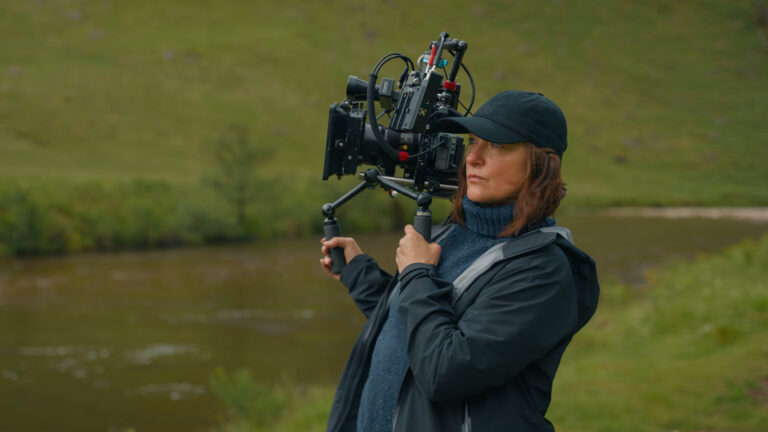
“There’s nothing natural about an anamorphic lens. It’s squashed, it’s compressed. It mushes up the image a bit more, it makes it more ‘filmic’ if you will.”
Anamorphic lenses have epitomised cinematic visual language for over seven decades. Originally developed as a practical solution to Hollywood’s widescreen problem, the format has since become one of the most deliberate creative choices a cinematographer can make, chosen for a specific set of optical characteristics that no other format replicates.
These characteristics are well known to working cinematographers and cinephiles alike: the oval bokeh, the horizontal lens flares, the distinctive focus roll-off and the wider field of view relative to focal length. Less well known is the history behind them including a largely overlooked chapter that connects the 1.5x squeeze ratio still in use today directly to the glass of Cooke Optics.
The anamorphic boom began in the early 1950s, when Hollywood faced an existential threat. Post-war cinema attendance was in sharp decline, and the rapid adoption of home television sets was accelerating the problem. One of the industry’s responses was widescreen and the race to deliver it led 20th Century Fox to a French astronomer named Henri Chrétien, who had spent decades developing an anamorphic optical system capable of squeezing a wider image onto standard 35mm film.
Fox launched CinemaScope in 1953. Using a 2x squeeze on the existing Academy frame, it allowed for existing cameras and projectors to still be used with the addition of an anamorphot and was quickly adopted across the industry. The format, and its descendants, established the visual grammar of widescreen cinema that persists today.
To learn more about the history of anamorphic read our previous blog post here.
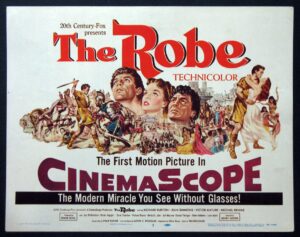
A Poster for The Robe (1953), the first film released in Cinemascope
While CinemaScope established the 2x squeeze as the industry standard it wasn’t the only anamorphic process available and parallel developments introduced different compression ratios. In time Cooke Speed Panchros would become the most common taking lens used within a plethora of anamorphic systems including Technirama.
Technirama, launched in 1957, was Technicolor’s answer to the widescreen boom. Rather than the cylindrical lens elements used in CinemaScope, the process used a prism-based anamorphic adapter. The “Delrama” was manufactured by the Old Delft company in Holland and mounted in front of a VistaVision camera system running 35mm film horizontally for eight perforations per frame instead of the four used when running vertically. Technirama then achieved greater clarity from a larger physical area per frame and a wider aspect ratio from the anamorphic attachment.
Read more about the development of VistaVision here.
The Delrama used curved mirrors in a periscope configuration to achieve its squeeze, an approach that produced exceptional sharpness and virtually no chromatic aberration, but resulted in a significantly bulkier and heavier camera setup than its cylindrical counterparts. The compression factor was 1.5x and the taking lenses behind those adapters were Taylor, Taylor & Hobson glass. The same British manufacturer that would go on to become Cooke Optics.
The process was used on over 60 films through the late 1950s and 60s, including Stanley Kubrick’s ‘Spartacus’ (1960), the only time Kubrick worked with anamorphic, shot by Russell Metty ASC. The 1.5x squeezed VistaVision negative was later optically printed onto 70mm stock for roadshow presentations in what became known as Super Technirama 70, with the opening titles crediting Panavision lenses used only in that printing process rather than at the capture stage.
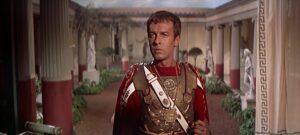
“Sparticus”
The Technirama process eventually fell out of use by the late 1960s as CinemaScope’s 2x standard consolidated its dominance. But the 1.5x squeeze ratio it pioneered didn’t disappear and resurfaced decades later as a practical solution for a new challenge: covering the larger sensors of modern full frame digital cameras. The Cooke Anamorphic/i FF lenses, released in 2018, use a 1.8x squeeze, a ratio chosen specifically to deliver the characteristics of traditional anamorphic while efficiently covering full frame sensor sizes.
The shift to larger digital sensors has had a significant impact on how anamorphic lenses are used and understanding why requires a brief look at how imager size and squeeze factor interact.
When shooting anamorphic, the goal is to use as much of the available imager (film or digital sensor) as possible. A 2x squeeze on a 16:9 imager produces an uncropped image of 3.56:1 — far wider than any delivery format such as Scope 2.39:1 requires — meaning a substantial portion of the sensor is discarded in post-production and exhibition. Beyond the inefficiency, this also means sacrificing resolution and the light-gathering capability of the full sensor area.
A lower squeeze factor changes this equation. A 1.8x squeeze on a full frame 3:2 sensor gets significantly closer to the 2.39:1 delivery ratio without the same degree of cropping — more of the imager is used, more light is captured, and the resolution advantages of a larger sensor are better preserved. For productions shooting on full frame cameras, this is a meaningful practical consideration alongside the aesthetic ones.
The 3:2 sensor is increasingly common across cameras from the Blackmagic PYXIS at the accessible end of the market through to the Sony Venice at the high end and is particularly well suited to a 1.5x or 1.8x squeeze for exactly this reason. The taller native aspect ratio means more sensor real estate is used when shooting anamorphic, giving cinematographers the characteristics of the format without the compromises that come with heavier cropping.
It is worth noting that the anamorphic process itself also mitigates some of the resolution concerns that might otherwise accompany cropping. The astigmatism inherent to anamorphic optics introduces a softness to the image that makes the loss of resolution through cropping less perceptible than it would be with a spherical lens. The format is naturally forgiving in this respect.
Anamorphic has always carried associations with a certain scale of production; the epic, the prestige, the cinematic. What has changed in recent years is not the format’s character but its accessibility, and with that, the range of productions for which it has become a viable and compelling choice.
The standardisation of 16:9 display technology removed one of the fundamental barriers to anamorphic television production. Early television’s 4:3 aspect ratio made widescreen presentation essentially incompatible with the home viewing experience – almost 50% of the image would be black padding for the letterboxed image. The 16:9 widescreen standard changed that equation. Streaming platforms and broadcast commissioners are now routinely approving wider aspect ratios, with 2.0:1 emerging as a particularly practical middle ground for anamorphic production. At 2.0:1 the more pronounced edge aberrations and distortions of wider anamorphic lenses are reduced, giving productions the character of the format without the extreme optical behaviour that can be harder to tame.
The proliferation of full frame digital cameras has been equally significant. Larger sensors, once the preserve of high-end feature production, are now accessible across a much wider range of budgets. The 3:2 sensor ratios common across many of these cameras offer an efficient pairing with 1.5x and 1.8x squeeze lenses, making anamorphic a more practical proposition for television workflows than it has ever been.
What is perhaps most interesting is where that accessibility has taken the format. Cinematographer Diana Olifirova’s choice of Cooke Anamorphic/i S35 lenses for Channel 4 comedy series ‘We Are Lady Parts’ is a case in point. Band two comedy and anamorphic are not obvious bedfellows, but Olifirova and showrunner Nida Manzoor made a deliberate argument for the wider frame, citing the ensemble cast, the ability to hold the whole band in a single shot, and a desire to make the series feel sleek and distinctive.
The optical characteristics of the format became part of the show’s identity. Working at T2.8½, the extreme edges of the frame were frequently soft which Olifirova embraced, treating it as part of what she describes as the show’s “punk, slightly on edge aesthetic.” She found the out of focus backgrounds on anamorphic looked more tactile, with the foreground standing out more prominently by comparison. (Read more here)

“We Are Lady Parts”
A similar logic informed Tony Slater Ling BSC’s approach to BBC One’s ‘Am I Being Unreasonable?’, a comedy-thriller that belies its modest budget with a distinctly cinematic look achieved with Cooke Anamorphic/i FF lenses and two Sony Venice cameras.
“I wanted it to look natural, but a little heightened,” said Slater Ling. “I love the look of anamorphic lenses, I love the way focus falls off, the bokeh of the lenses and the ovality and flare of highlights. I wanted the 2.40 aspect ratio for both a cinematic look and to frame group shots and two-shot close ups without the distraction of too much space around the characters on the top or bottom of frame, with a concentration on the characters.” (Read more here)
At the larger end of the scale, Disney+’s ‘Percy Jackson and the Olympians’ demonstrates how effectively anamorphic handles the demands of a VFX-heavy production. Cinematographer Pierre Gill CSC, who shot the pilot and final three episodes of the series, was unequivocal about his reasons for choosing Cooke Anamorphic/i S35 lenses. “I am an anamorphic lover,” he said, “the main reason is not always the artistic flare or bokeh, but the proximity to the actors. Anamorphic lets you be next to the face of the character — you are twice as close to an actor than you would be using spherical for the same size, and the audience feels it.” (Read more here)
One of the most persistent misconceptions about anamorphic lenses is that they belong to a particular kind of film. The epic, the western, the sweeping historical drama — these are the productions most readily associated with the format, and with good reason. But anamorphic was never designed with genre in mind, and its history tells a different story.
From the earliest CinemaScope productions through the Technirama era and into the modern lenses available today, the format has been applied across the full spectrum of filmmaking. Horror, comedy, science fiction, intimate drama… the common thread is not subject matter but intention. Cinematographers reach for anamorphic when they want a specific set of optical characteristics in service of a particular visual goal, and those goals are as varied as the productions themselves.
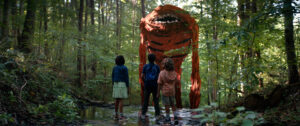
“Sketch”
Megan Stacey’s work on ‘Sketch’, Seth Worley’s family adventure and horror hybrid that premiered at TIFF 2024, illustrates the point well. “We decided to shoot anamorphic because we wanted people to know right off the bat that they were about to go on an early-Spielberg-type adventure,” said Stacey. “I think people just have an automatic emotional reaction to the widescreen and the fall-off that communicates that you’re watching something epic. We don’t see the world the way an anamorphic lens does — watching a film shot this way gives a feeling of a cinematic experience being imminent.” Cooke’s Anamorphic/i S35 lenses were selected for their balance of modern reliability and optical character. “There’s softness, there’s the traditional characteristics and there’s a little bit of breathing which is nice but it’s not totally mushy. It doesn’t fall apart, even wide open.” (Read more here)
The range of productions now working in anamorphic is the clearest indication that the format has moved well beyond its associations with any particular genre or budget level. It retains is the visual weight and cinematic authority of seventy years of cinematic history while remaining open to whatever a production requires of it.