Search for lenses, articles and help
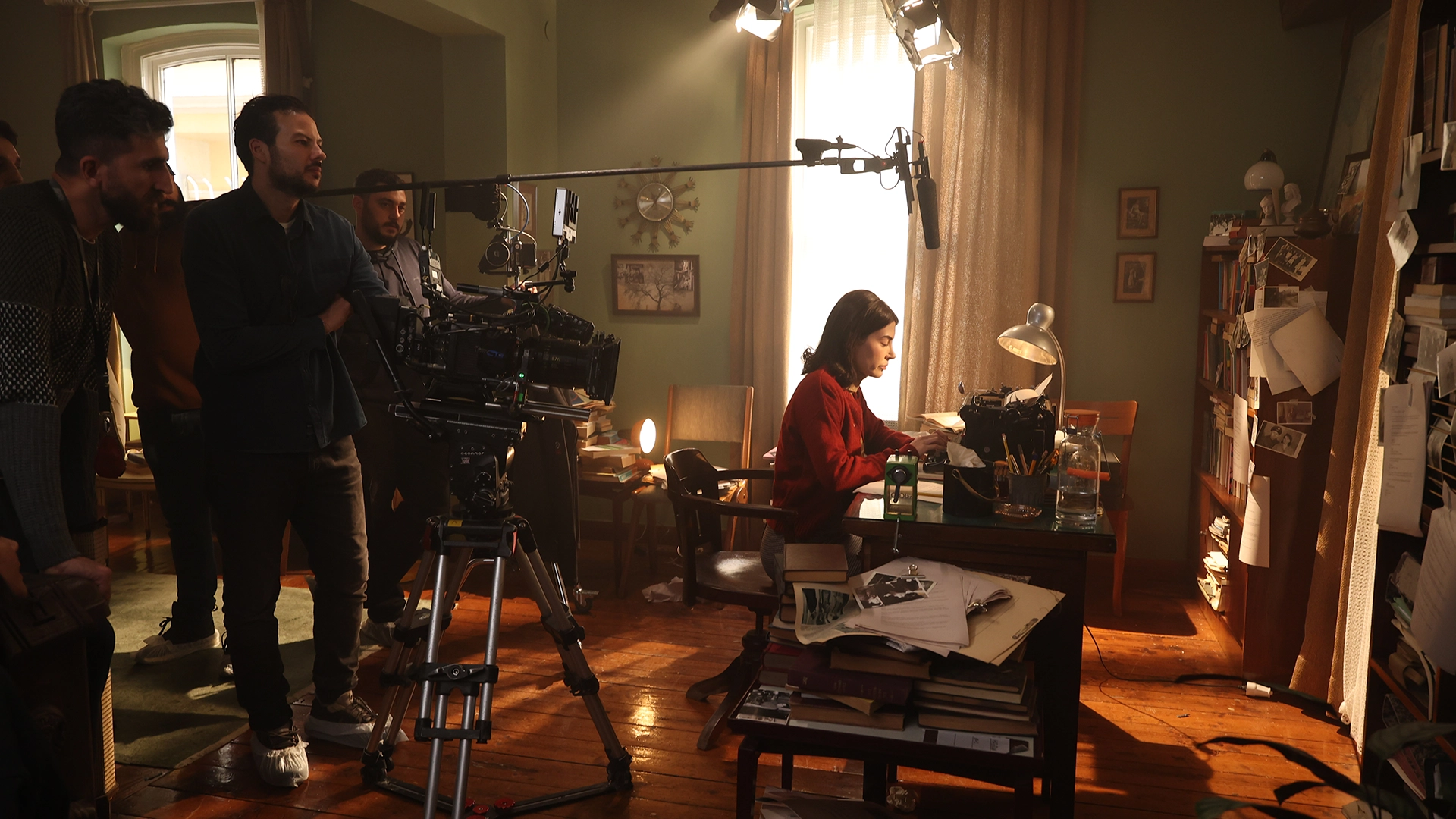
Australian Director of Photography Alper Kasap has been recognised for his excellence in narrative cinematography. A winner of multiple accolades, his breakout work includes The Fall, a Sydney Film Festival finalist for Best Film, and more recently, Imperium and Kuduz , which earned him his fourth ASC Gold Award.
After careful consideration, Alper selected Cooke S7/i FF and SP3 lenses for his upcoming feature biopic AYŞE. Cooke spoke with the cinematographer about his visual approach, challenges he faced and his thoughts on using Cooke lenses for the project.
Ayşe Şasa is one of the most iconic and complex figures in Turkish cinema history. Growing up in an aristocratic family, she defied traditional expectations, choosing to pursue art. She went on to become a trailblazer in filmmaking and eventually brought this same passion into her family life, marrying well-known director Atıf Yilmaz. AYŞE delves into her childhood and early adult life, and the transition into her filmmaking career.

AYŞE marks Alper’s second project working alongside director Osman Nail Doğan. After hearing the concept for the film and learning that they would have more creative freedom this time round, Alper found the offer to work with Osman Nail Doğan again “too compelling to refuse”.
The film is set in early 1970s Istanbul. When storyboarding, Alper researched extensively street photography, architecture and interiors, clothing, and the emotional tone of the period.
“Visually, we wanted a world that was predominantly warm and inviting, especially in the early stages of the story, when Ayşe is living alone and trying to establish herself as a writer. She is quiet, reserved, and deeply driven, and the warmth helped make her instantly likeable and emotionally accessible.
Only towards the end of the series, as Ayşe’s arc begins to shift and her world changes, did we allow the lighting, framing, and tonal balance to evolve more noticeably.”
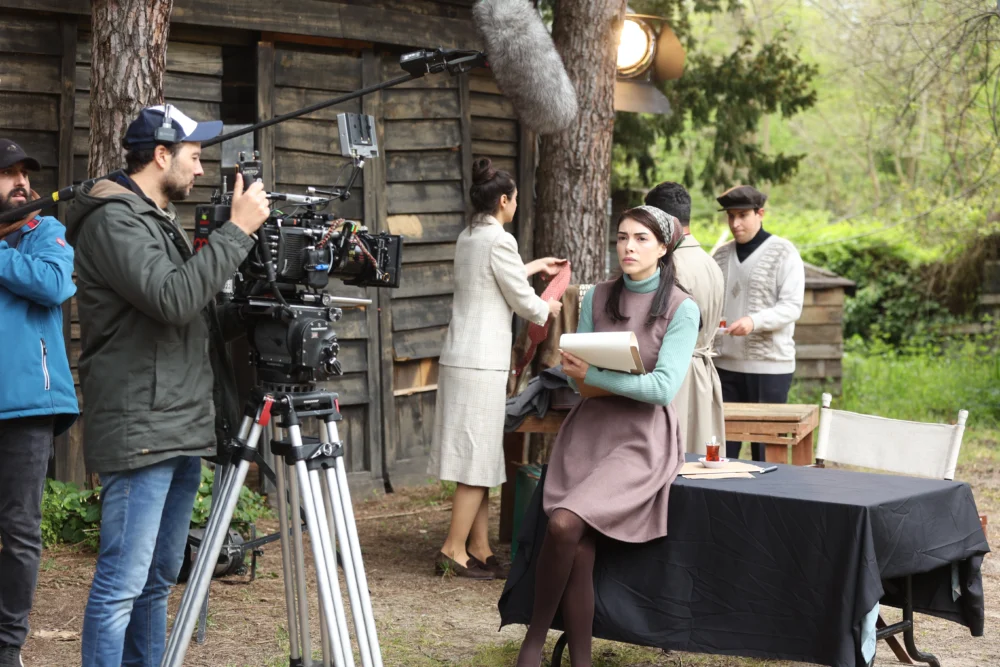

Collaboration, particularly for a project shot in such a specific decade, was crucial from the outset. Alper worked closely with costume designer Tuba Ataç, production designer Rıza Çağlar and the colourist Ufuk Aktaş to bring authenticity to the 1970s environment. With the period in mind, Alper was conscious about using a digital sensor and wanted to avoid an image that felt too clean or precise. As a result, he spent time exploring how to subtly soften the image better to reflect the era.
“From the beginning, I knew I wanted the world of AYŞE to feel warm, but not in an artificial or overly stylised way. Because the series is set largely in the 1970s, it felt important to honour the quality of light used during that era, particularly incandescent tungsten lighting, which was the dominant source at the time. There’s a very specific character to those older tungsten units, especially in the way they render skin tones, roll off highlights, and create depth. That quality was something I felt strongly about preserving.”
To achieve the desired look, the cinematographer and colourist fine-tuned a LUT together, “until it felt intuitively right, not mathematically correct.” Because of this close collaboration, the final grade remained remarkably close to what they saw on set, with the colour process becoming one of refinement rather than reinvention.
When it came to lenses, Alper sought something that would feel evocative on his Arri ALEXA Mini LF sensor, without being overly sharp or clinical. “I wanted a sense of warmth, softness, and vibrancy, something that would complement the world we were building and the incandescent tungsten lighting we were using.”
After extensive testing, the cinematographer and director decided to return to Cooke, having used the Panchro/i Classic series on their first collaboration. This time, they turned to the S7/i and SP3 ranges.
“During testing, there was an immediate response to them that’s hard to quantify technically. They have a quality that feels almost emotional, as if the lens itself is contributing to the storytelling rather than simply recording an image. Used in the right environment, they feel incredibly evocative.”
Alper found that the S7s offered the balance he was looking for.
“They gave me a beautiful highlight roll-off, gentle contrast, and a natural rendering that felt very appropriate for a period story. They supported the emotional tone of the series without drawing attention to themselves, which is always my preference.
In short, they ticked all the boxes and felt like the perfect optical partner for this world.”
“The Cookes stood out because they felt like the perfect balance of everything we were searching for: character without distraction, softness without loss of detail, and warmth without feeling nostalgic or heavy-handed.”
Alper required a B-cam solution during filming. After seeing the work from Netflix’s Adolescence, shot on a Cooke SP3 32mm, Alper became interested in incorporating the SP3s into moving shots. When evaluating tests between the SP3 and S7s, Alper commented: “The colour and tonal differences were minimal, and my colourist was easily able to fine-tune the match. This allowed us to move seamlessly between our main camera and Steadicam-style shots while maintaining a consistent visual identity throughout the series.”
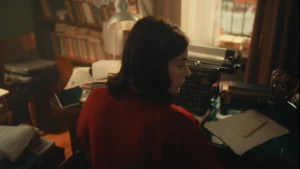
For AYŞE, a natural image was crucial throughout. Alper’s hero focal length was the 40mm S7/i. “The 40mm felt like a perfect sweet spot. It allowed me to stay wide enough to capture environment and movement, while still being able to push into close-ups without losing intimacy or context.
Using the 40mm permitted greater creative freedom with minimal distortion. “That focal length allowed me to dance with the actors, maintaining rhythm and flow without calling attention to the lens.”
“Cooke lenses helped make the series feel naturalistic, immersive, and emotionally grounded. They rendered skin tones beautifully, particularly for Ayşe as our central character, and introduced a warmth that felt inviting without becoming sentimental.
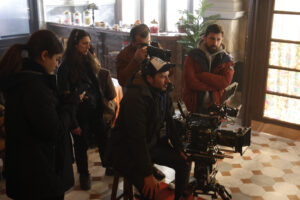
They also gave me the freedom to work creatively with framing and movement, knowing that the image would always hold together optically. Shooting at T2 was a real gift, especially during night scenes, where the lenses produced a beautiful, gentle bokeh that added depth without distraction.
Ultimately, they supported the emotional tone of the series rather than imposing a look, which is exactly what I want from lenses.”
Several scenes reassured Alper that he made the right lens choice. The way the lenses handled low-light contrast, skin tones and highlight fall off all played a part in the final look. “Even in busier frames with multiple characters, the lenses helped maintain separation and focus on Ayşe without forcing the audience’s attention. That subtle guidance is one of the things I value most about Cooke optics.”
For the Steadicam work, Alper paired the Cooke SP3s with the DJI Ronin 4D, which proved to be an ideal run and gun solution that maintained a consistent look. “Their smaller size and lighter weight made the setup far more practical, allowing us to move quickly between A-camera and moving shots without compromising the optical consistency of the show.”
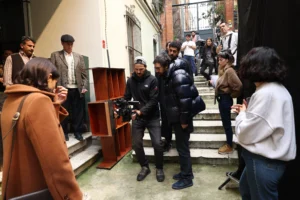
The crew rented the lenses and camera set ups from Orion Camera and Lighting. “My 1st AC/focus puller Muhammet Ali Erdem also needs a mention making sure they were clean and primed ready for use while my focus always remained exactly where I wanted it. Both Muhammet & Orion were fantastic to work with and very supportive throughout the process.”
Together, these creative and technical choices reinforced Alper’s belief that cinematography should always serve character above all else. For him, the true measure of success lies not in the visibility of the tools, but how seamlessly they serve the story and emotion.
“What I value most is when the technology disappears and allows the audience to fully engage with the story and the performances. The Cooke lenses gave me that confidence on AYŞE. They supported the emotional weight of the characters, rendered skin tones with honesty and warmth, and introduced a sense of depth and humanity that felt entirely appropriate for the world we were creating.
In a series that lives so deeply in character and memory, having optics that feel intuitive, trustworthy, and emotionally responsive makes a real difference. For me, that’s where Cooke truly excels, not in drawing attention to the lens, but in quietly serving the story.”