Search for lenses, articles and help
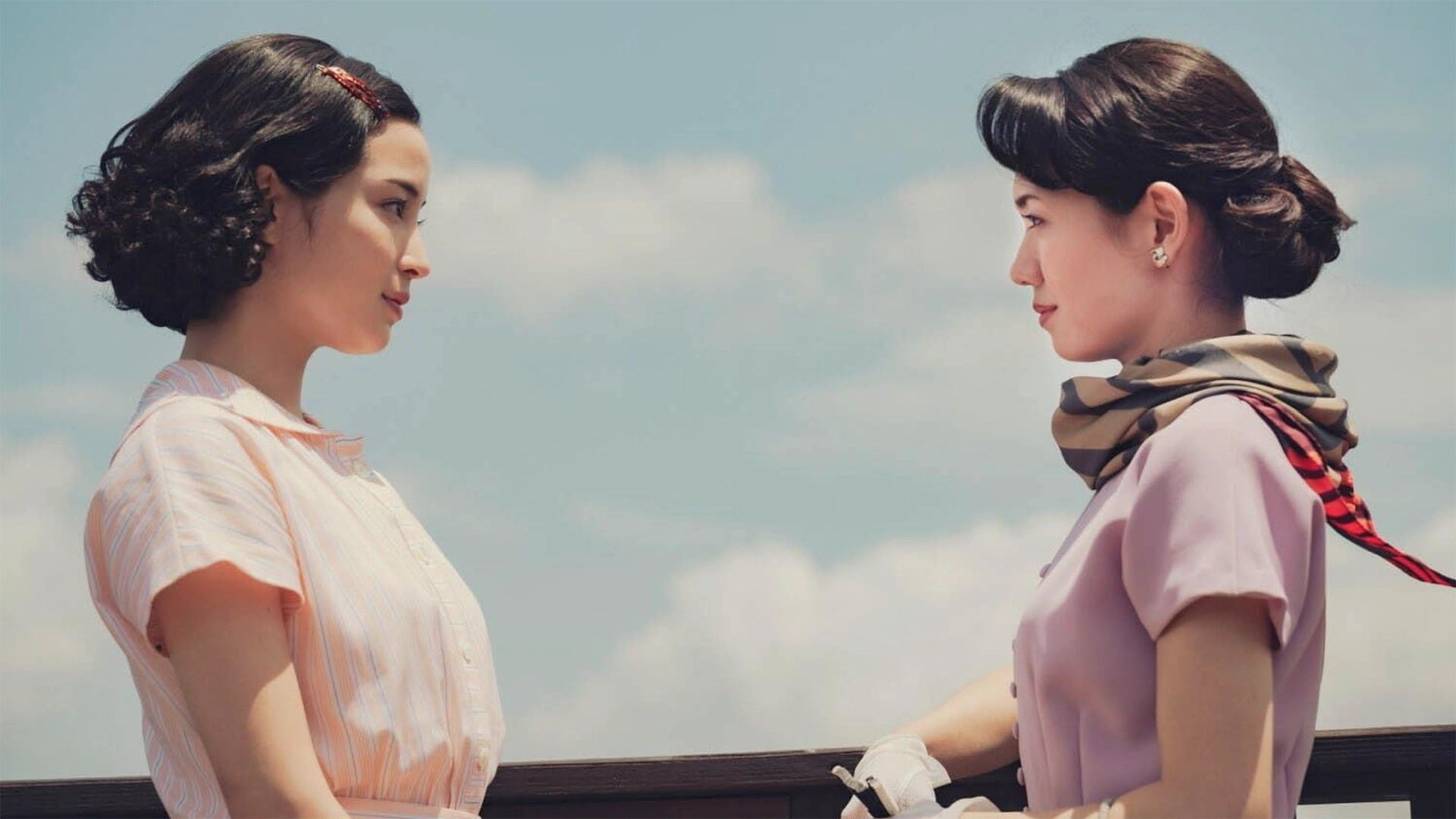
Released March 13, A Pale View of Hills is a new feature film based on Kazuo Ishiguro’s novel of the same name. The film premiered at Cannes Film Festival 2025 and was a nominee for the prestigious Un Certain Regard award. Since then, the film has garnered widespread acclaim, with numerous other award nominations including Best Cinematography at the 2025 British Independent Film Awards.
A Pale View of Hills was shot by Cinematographer Piotr Niemyjski PSC JSC and directed by Kei Ishikawa, making this their fifth movie collaboration. Piotr is originally from Warsaw, Poland but spend much of his career living and working in Japan which earned him a membership of both the Polish and Japanese society of cinematographers.
We spoke with Piotr about his time shooting A Pale View of Hills, his creative intentions and his thoughts on using Cooke S8/i FF lenses.
Ishiguro’s debut novel was published in 1982 and draws on his own roots of living in both Nagasaki and England. The story follows Etsuko, a Japanese woman living alone in England after the suicide of her daughter. Retreating into the past, she finds herself reliving one particular hot summer in Nagasaki, when she and her friends struggled to rebuild their lives after the war. But as she recalls her strange friendship with Sachiko – a wealthy woman reduced to vagrancy – the memories start to take on a disturbing cast.
When discussing the process of storyboarding, Piotr and Kei discussed directors from 1950s Japanese cinema such as Yasuiro Ozu or Mikio Naruse. Since Ishiguro lived in the UK at the time of writing the book, they concluded that his visual inspiration of Nagasaki during this time would have been partially shaped by directors from this decade.
To further draw a visual guideline for the era, Piotr commented, “To this list, I added some Japanese photographers documenting this period like Domon Ken or Shomei Tomatsu.”
In terms of the colour and look of the film, Piotr explained: “The film’s protagonist Etsuko who is imagined by her daughter Niki listening to her mother’s story, was devoted to the movie Gone with the wind, which pushed us to think about the Technicolor palette… this colour reference is strongly visible in the movie.”
“There are some scenes on the edge of dream, and we reached for Ballad of Narayama by Keisuke Kinoshita and Dodeskamon by Akira Kurosawa. Our idea was to follow the essence of storytelling in the script. The story is imagined by an aspiring journalist who listens to her mother’s story. The story is very strange as it hides the truth wrapped in silence, lies and secrets. We take Niki’s point of view – not knowing everything, not seeing everything, not being able to follow characters but still trying to connect the dots.”
Piotr had to work very closely with the VFX team to recreate the Nagasaki of the time. “The Japan we depict in the movie does not exist any longer. Me and Kei had to rely on the VFX team – Juice and Human Arc and production designer Hiroyuki Wagatsuma, who is part of so called “Ishikawa gumi” – we trust him a lot.”
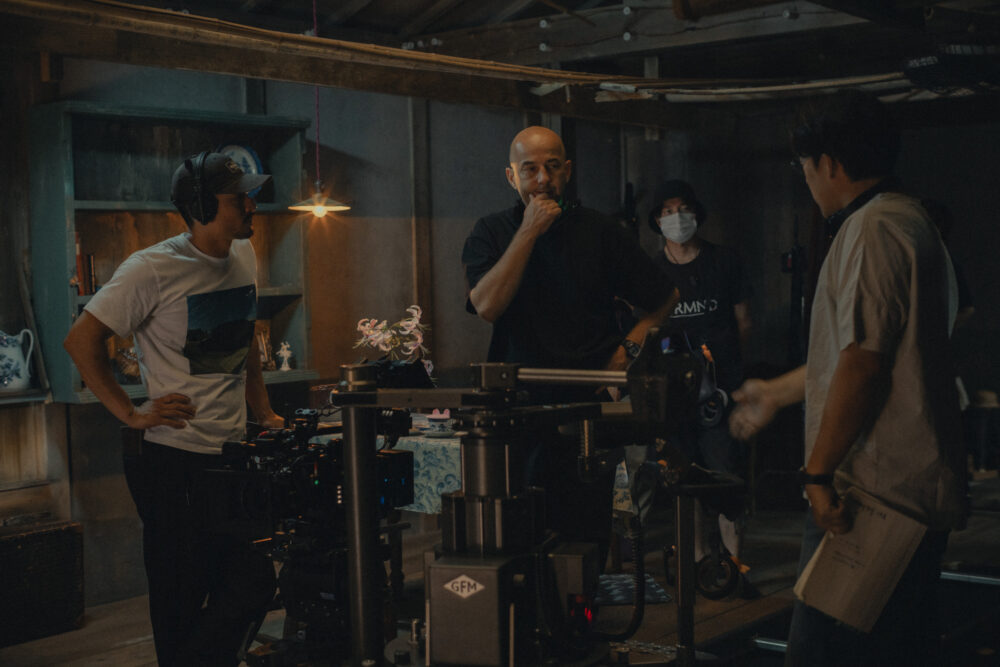
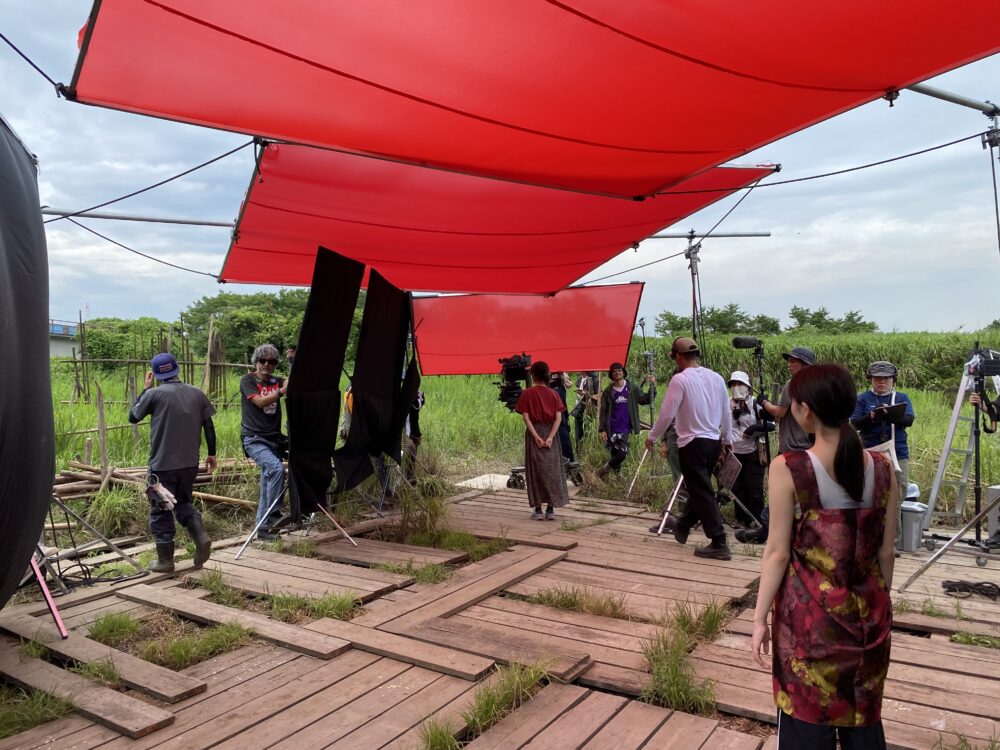
The colour grade was done by Michal Herman. “Michael is a superb colourist who helped me a lot during prep period with solving quite a problem; I was asked quite early to shoot some scenes Day for Night. The reason was because we had a child on set and we could not work longer than 8pm due to regulations in Japan, but we had night exteriors scenes with her and the sun was setting at 7.30pm. As soon as I received this request, I did many tests to figure out whether it’s possible with satisfying quality and Michal Herman was the key person to make it happen.”
“Another challenge was a sequence where we wanted the sky to turn red. We wanted it to look realistic but disconcerting at the same time. For that, I found a solution with my Japanese gaffer – Kenjirou Soh. I wanted the actor’s faces to be red without fixing it in post. To do so, we brought in red fabrics and hung these above the actors to filter the light coming from the sun to give the desired effect.”
When selecting his camera gear, Piotr needed a large format solution so that he and the director Kei could maintain distance from the actors and separate them from the background. They landed on the Arri Alexa Mini LF paired with Cooke S8/i FF lenses. Piotr had used Cooke lenses on previous work and so was happy to test out the S8s for A Pale View of Hills.
Piotr explained his process in choosing the right glass for the film. “As large format was decided, the choice of lenses was limited. I didn’t want to use rehoused or vintage photographic lenses – they were not designed for movies and consistency was a concern. Also, I didn’t want to recreate the photographic process from the ‘50s. Another important thing was to cover as much of sensor as possible for 1:1,66 aspect ratio. One more demand was to keep the lens as wide open as possible in order to separate actors from background. Cooke S8 was the perfect lens for all my requests.”
“It is very easy to switch between the lenses within the set. T-stop, close focus, size – they are all ideal and camera crew friendly. All the lenses are perfect for portraits with their soft look but still very crisp in details, especially skin detail. Cooke are not specialist lenses, they are natural lenses to me, and this characteristic is so unique.”
Initially, Piotr did test alternative lenses for his setup. “I did the first tests in Poland but as Cooke S8 were not available here, I first checked out vintage lenses covering FF. All of them were too fancy or too strange or too problematic from technical perspective (e.g. different speed on every lens from the set or shallow margin on focus scale). Once I went to great camera rental Sanwa Japan I picked Cooke S8 immediately to test skin tone and skin definition in mid shots. These lenses gave me the image I needed.”
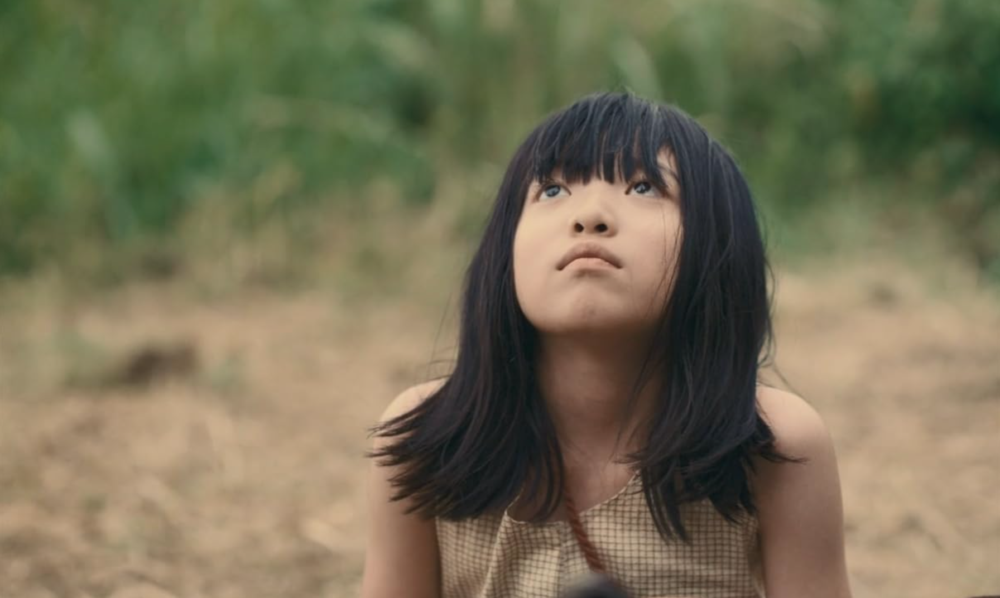
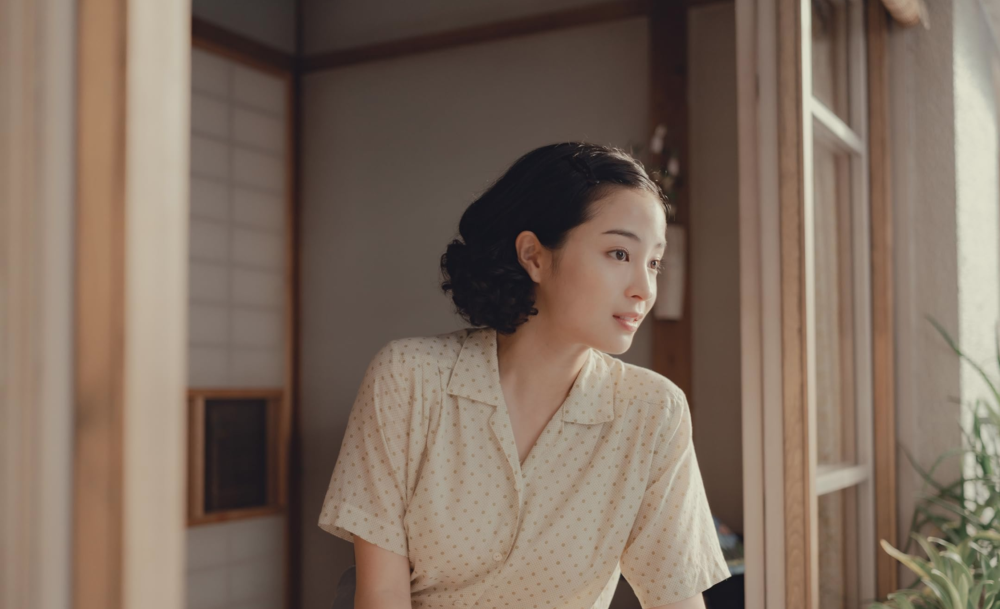
Piotr recalls a key moment in the film where the S8s stood out for him. “There is a crucial scene in the movie where Etsuko talks about the day she experienced the explosion in Nagasaki. Kei and I were aware of showing too much about events none of us can really understand. I wanted to use light as an allegory of enormous duality it has in this story; it may be destructive and creative and I wanted to show it like that. There is the sun setting and there is a reflection of it in the window of the building opposite. When Etsuko reaches the peak point of her story, the lens is hit by this light and flare covers Etsuko’s face so her facial expression remains intimate. Just after that, the sun disappears and dusk comes quickly, just as her drunk husband returns home. I needed this transition from sanctum to profanum and the lenses were perfect for that. I didn’t lose anything of the facial expression, yet it remained covered with flare.”
Piotr concludes by thanking his focus pullers Yasushi Miyata and AJ Goleswothy as well as his DITs Takeshi Yamaguchi and Sam Spurgeon and his gaffer Carolina Schmidtholstein.
A Pale View of Hills is out now in UK cinemas.