Search for lenses, articles and help
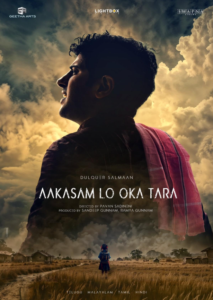 Aakasamlo Oka Tara
Through two different lens systems, Sujith creates two visual worlds that come together as one emotional journey.
Every cinematographer has a way of seeing a story. But what makes a cinematographer truly distinctive is the ability to reinvent that visual approach with every film.
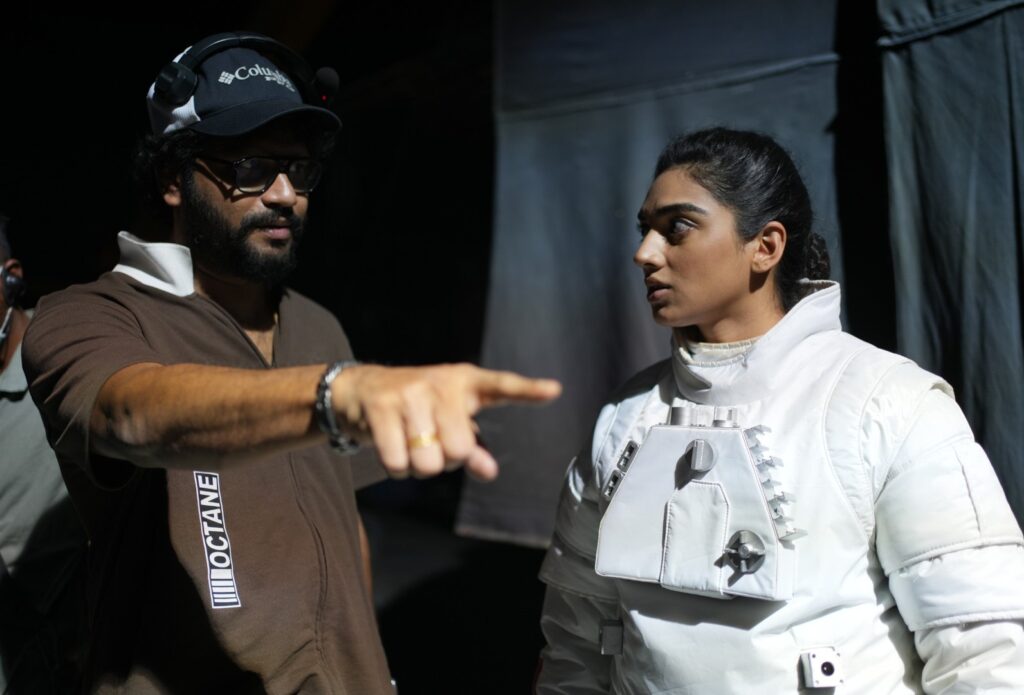
Sujith Sarang is one such cinematographer. Known for his thoughtful and individualistic approach, he doesn’t simply follow a familiar visual style. He studies the emotional core of a screenplay and develops a visual language that belongs to that particular story.
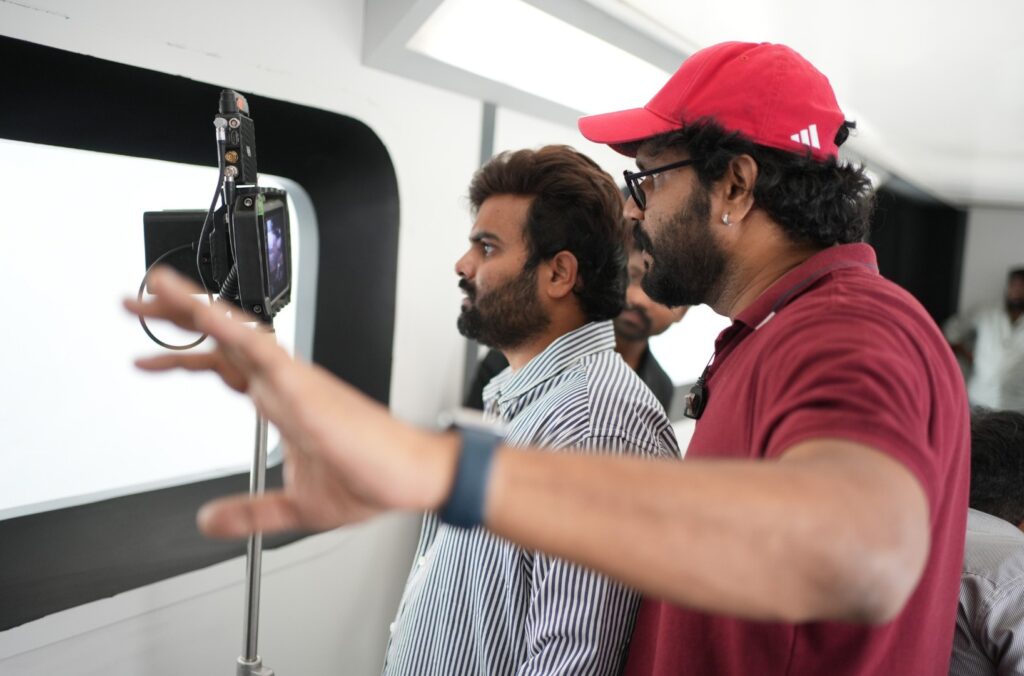
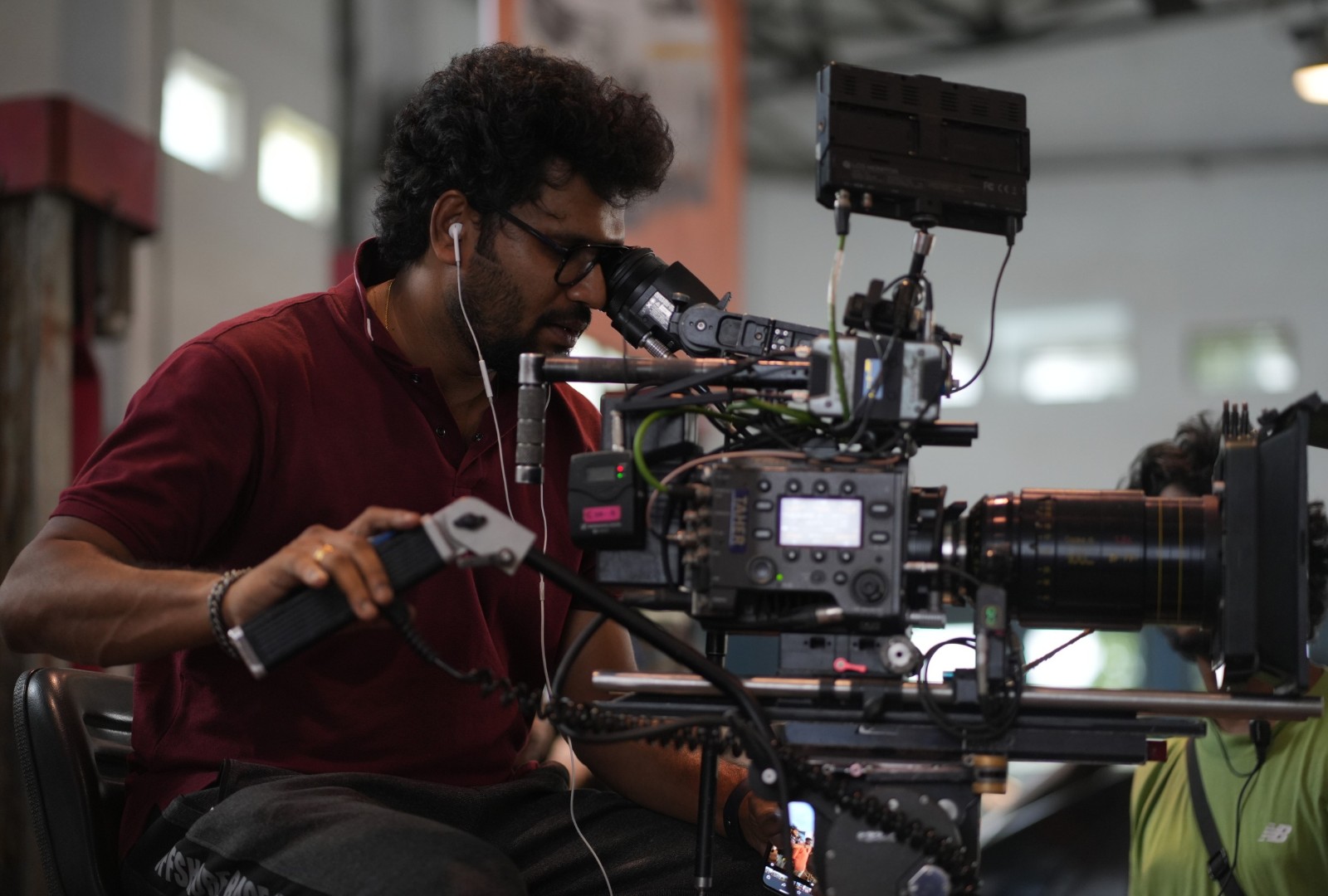
His work in the Telugu film *Aakasamlo Oka Tara* is an interesting demonstration of this philosophy. What makes the cinematography particularly fascinating is a creative decision that goes beyond conventional lens selection. The film employs two different optical systems and two aspect ratios across its two halves, creating two distinct visual worlds that reflect the evolution of the narrative.
First Half – 2.65:1 | Cooke Anamorphic
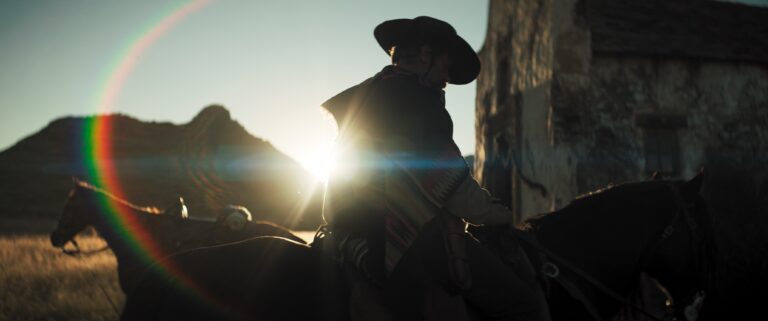
The first half is photographed using Cooke Anamorphic lenses in a 2.65:1 aspect ratio. This part of the story explores innocence, dreams, relationships and the emotional journey of its characters.
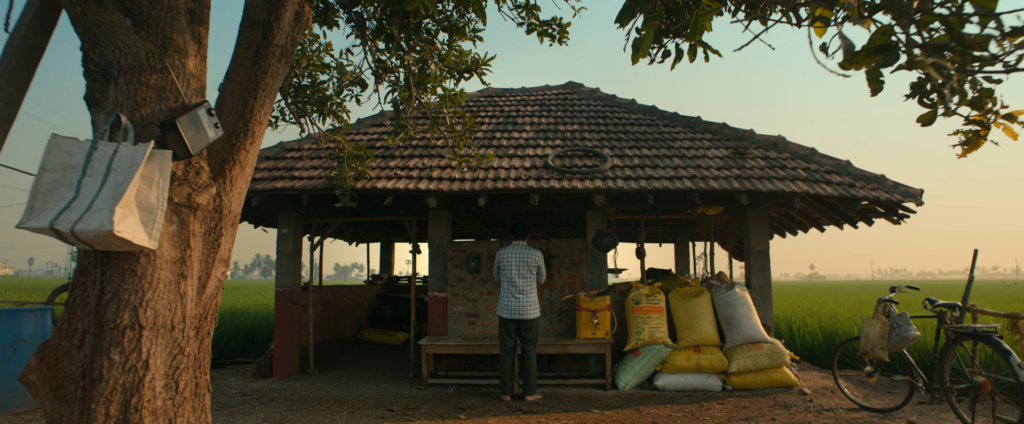
Sujith wanted a wider cinematic canvas that could embrace the geography, landscapes and open vistas while retaining the intimacy of human emotions.
The anamorphic format provides that expansive visual character. Its beautiful spatial rendering, distinctive perspective and graceful out-of-focus fall-off contribute to the film’s cinematic scale.
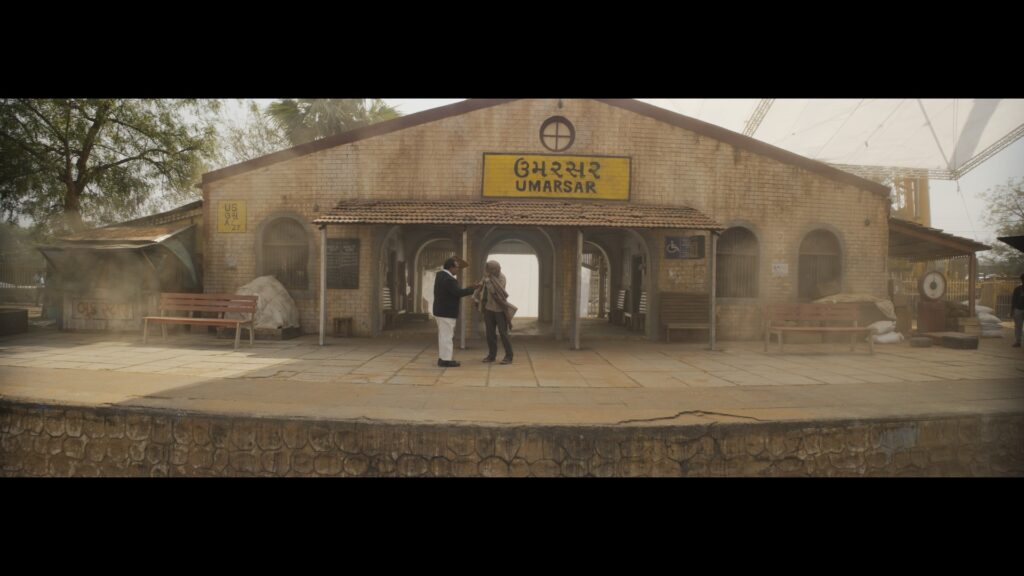
The wider frame also complements the coming-of-age nature of this part of the narrative, allowing the audience to experience the characters’ dreams and aspirations.
The second half transitions into the 2.40:1 scope format, photographed using Cooke S8/i spherical lenses. As the narrative moves towards its scientific and space-related dimensions, the visual language changes accordingly.
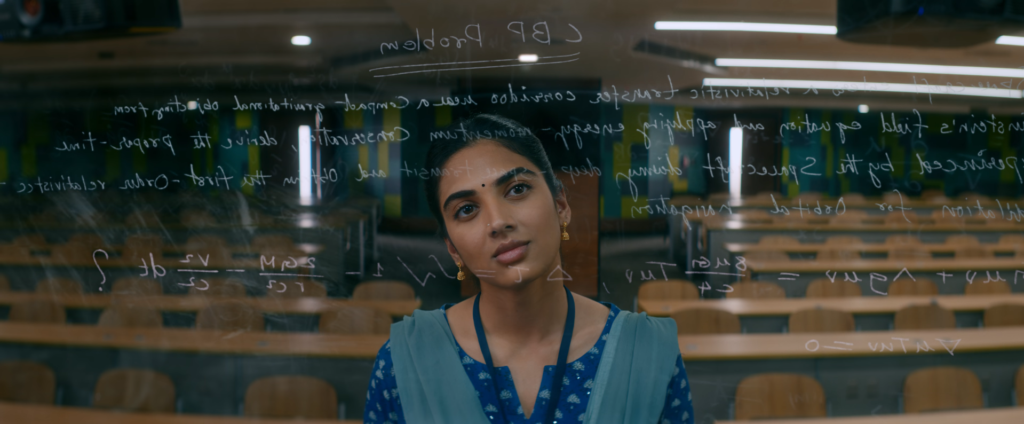
Sujith wanted a cleaner, more direct image for this section. The spherical format offers a contrasting visual character, with a different sense of perspective and composition. The transition also brings a subtle sense of breathing space to the film.
What is particularly interesting is that this change is not merely a technical variation. It reflects the progression of the story itself. Two different optical approaches, each serving a specific emotional and narrative purpose.
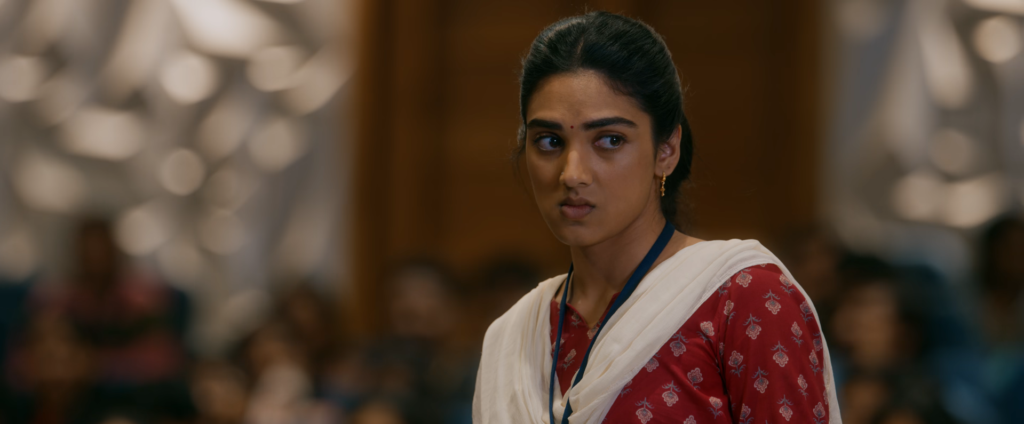
For me, the choice of lenses was largely driven by the kind of image I wanted to create. I wanted the visuals to feel organic and natural, without leaning towards an overly digital or clinical appearance. The warmth in skin tones, the quality of the out-of-focus areas and the overall rendering of the image were important considerations.
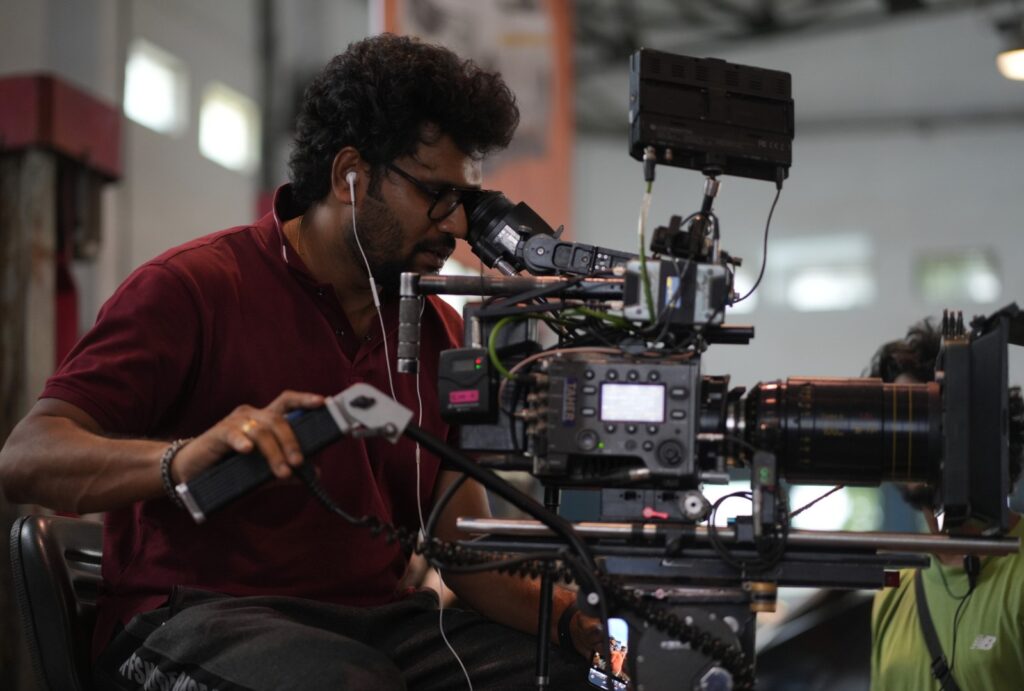
Cooke lenses have a beautiful dimensionality and graceful fall-off towards the edges. I particularly like the way they render faces and maintain a natural separation between the subject and the background without making the image feel overly processed.
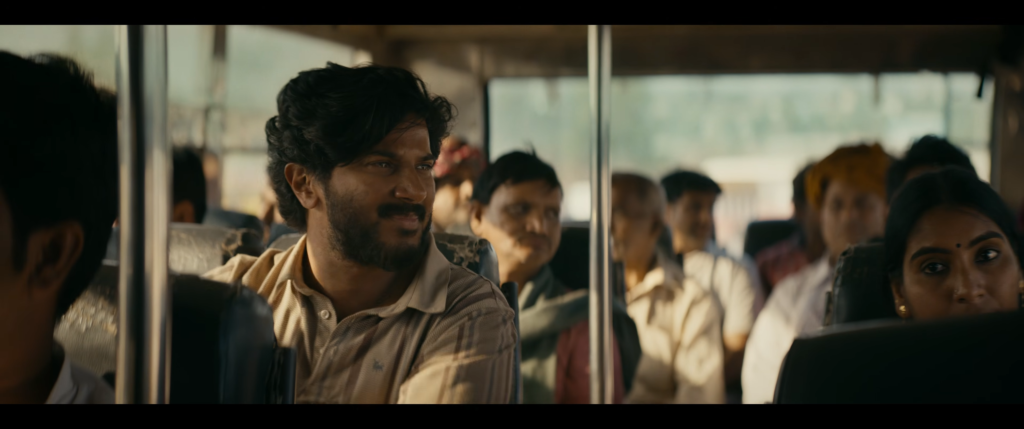
I wanted to maintain a visual balance throughout the film, especially in scenes where the emotional connection between the characters was central to the narrative.
My approach to lighting was also quite balanced. Rather than going too high-key or low-key, I preferred working within a middle tonal range, allowing the images to retain their depth, richness and natural contrast without becoming unnecessarily dramatic.
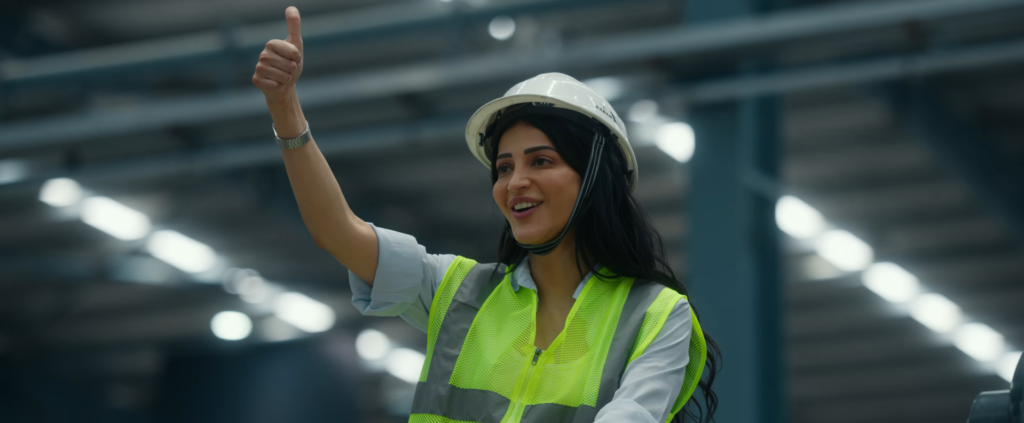
It was about bringing together the right lens character, lighting and composition to create an image that felt true to the world of the story.
One of the film’s biggest challenges was creating convincing space sequences. Sujith understood that technical credibility was essential. If the visual effects failed to establish a believable world from the beginning, the audience’s connection with the narrative could be affected.
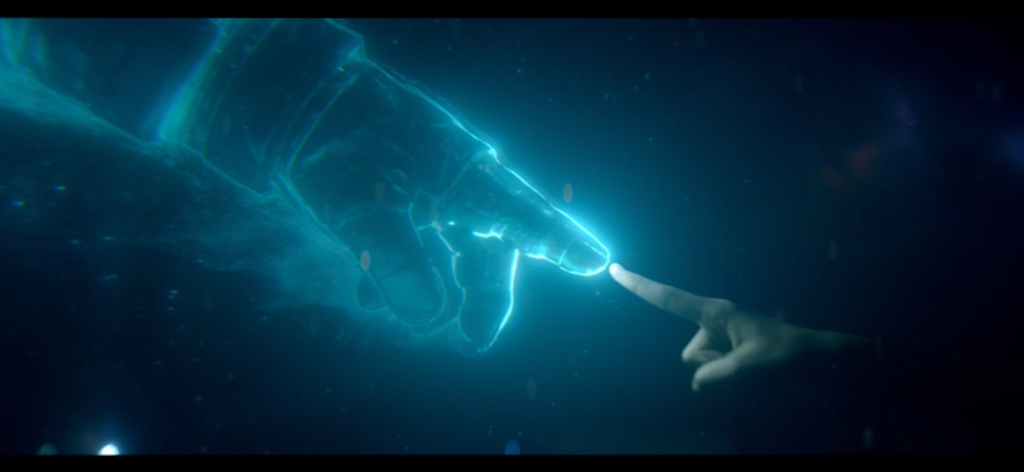
His preparation for this challenge began several years earlier.With an interest in physics and a fascination for space films such as Gravity and Interstellar, he had already started exploring Blender, Unreal Engine, 3D modelling and virtual production.
He also invested time in understanding how digital environments, lighting and compositing work. The preparation extended beyond software. The team visited Sriharikota, ISRO facilities, Skyroot Aerospace in Hyderabad and the Indian Institute of Space Science and Technology in Thiruvananthapuram.
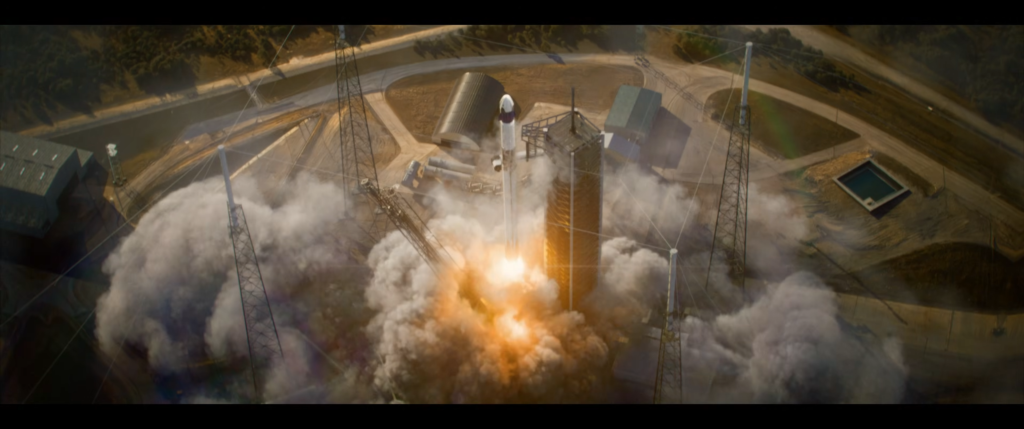
Interactions with scientists, researchers and students helped the team understand the real world of space exploration. This research gave the production a stronger foundation for creating an authentic visual environment.
One of the interesting technical aspects of the film is the use of white screens and black screens for selected visual effects sequences.
Instead of depending entirely on conventional green-screen techniques, the team explored alternative backgrounds based on the requirements of each shot.
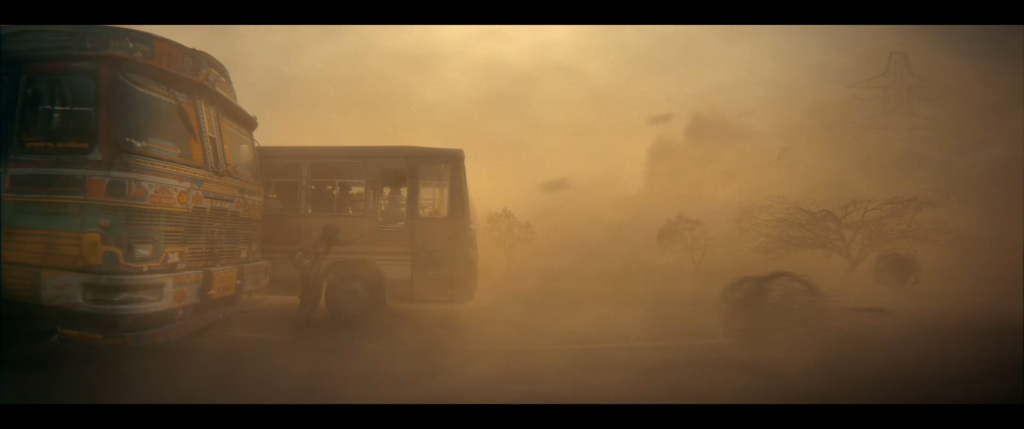
The reasoning was largely connected to edge integration and colour preservation. Removing green or blue backgrounds can introduce colour spill around subjects, particularly along skin tones and fine details. Correcting these areas can demand additional work in post-production.
For several sequences, white screens provided a more suitable solution. The natural edge haze and light integration helped the subjects blend more convincingly with the intended backgrounds.
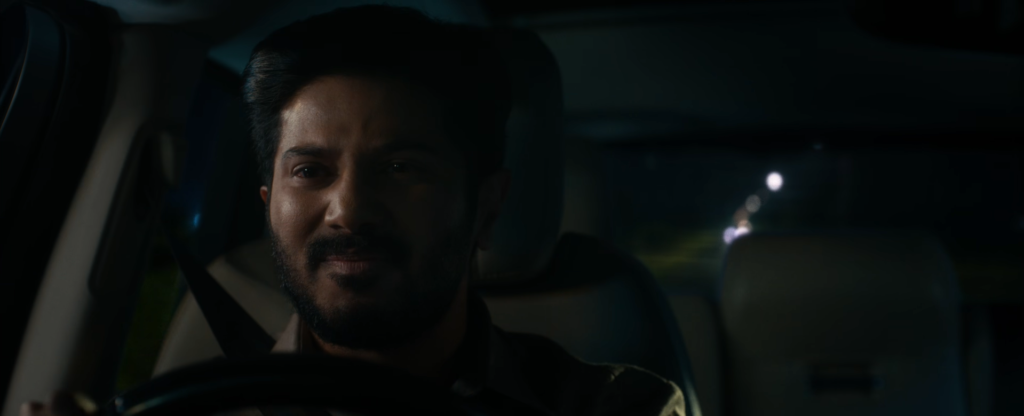
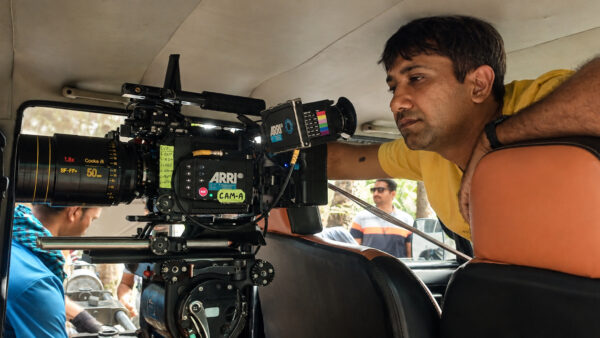
The technique was used in selected car shots and other sequences requiring digital environments. For certain night scenes, the team adopted another interesting approach. Scenes that appeared to take place at night were actually filmed during the day inside a blacked-out tent.
Controlled warm lighting, roto work and compositing helped create the final night atmosphere. The railway station sequence involving a sandstorm also benefited from the white-screen approach.
These decisions reflect an important aspect of contemporary cinematography: understanding visual effects is no longer separate from understanding lighting and camera work.
The space-station interiors were carefully designed to accommodate the cinematography. Working with production designer Sabu Cyril and his team, the filmmakers explored the design through miniatures and extensive planning.
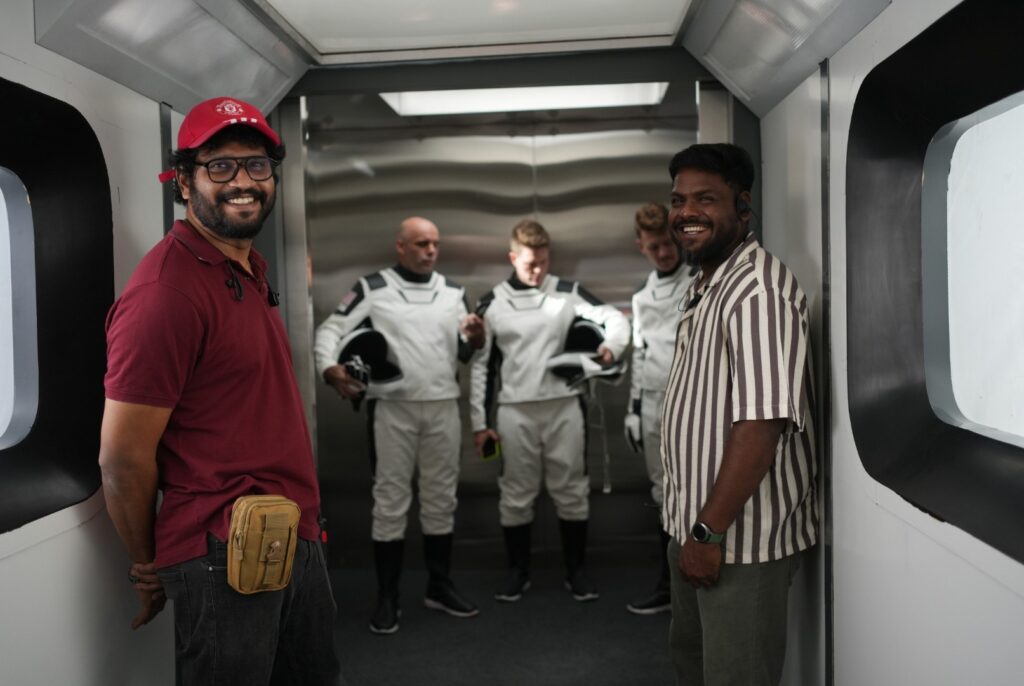
The capsule was designed with removable sections to allow camera access and movement. Sujith wanted the camera to float naturally around the performers, reflecting the weightlessness of space.
Rather than relying heavily on mechanical track movements, he explored more fluid camera movement using ARRI Trinity and Steadicam systems.His intention was to stay close to the characters and their emotions, often using wider lenses to create an immersive perspective.
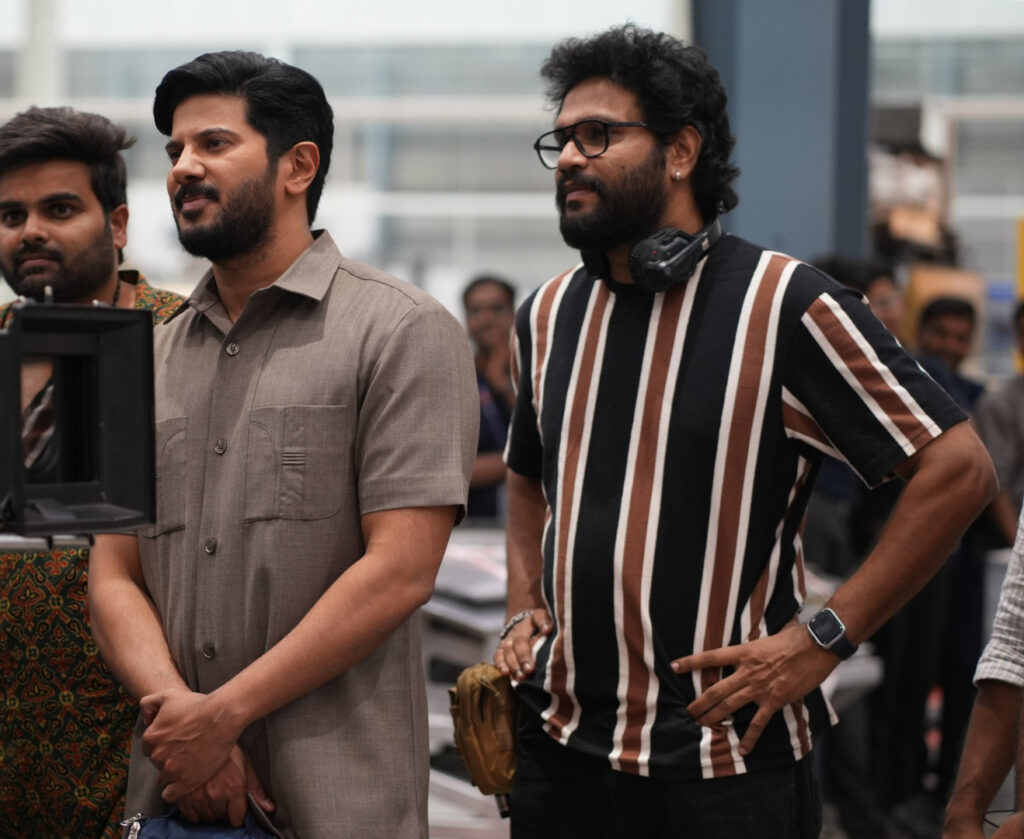
The floating sequences were also achieved through practical techniques, with performers suspended using specialized rigs and wire arrangements. The actress underwent several days of rehearsal to prepare physically for these demanding sequences. The combination of practical execution and visual effects helped establish a convincing sense of weightlessness.
Another interesting element of the cinematography was the use of the Cinetica camera system Initially, Sujith was not convinced that the equipment would offer anything significantly different from existing camera movement systems.
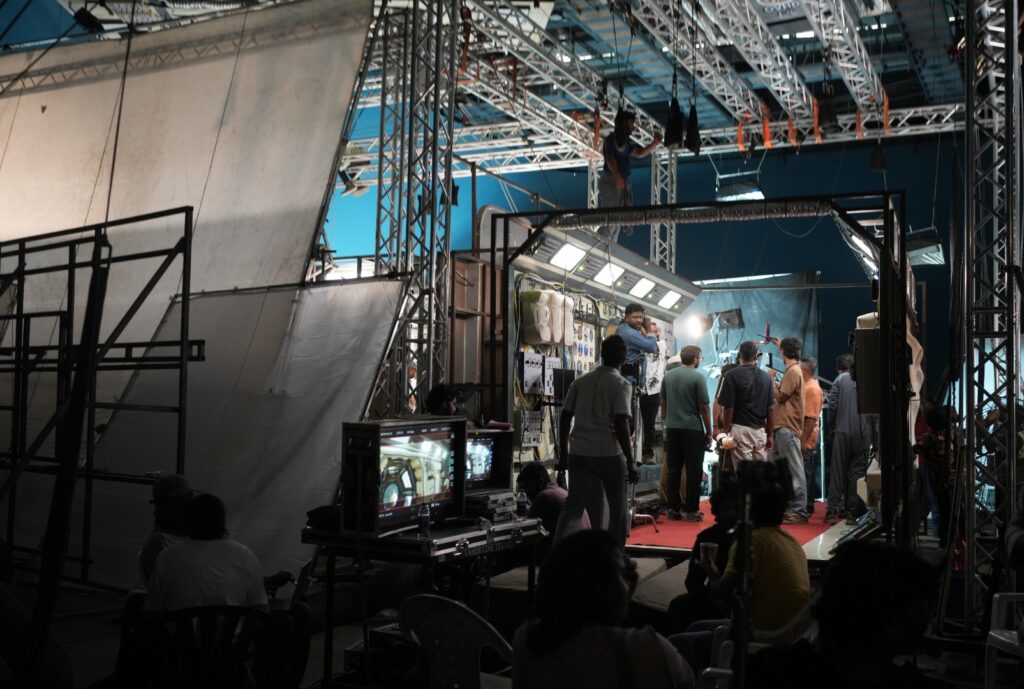
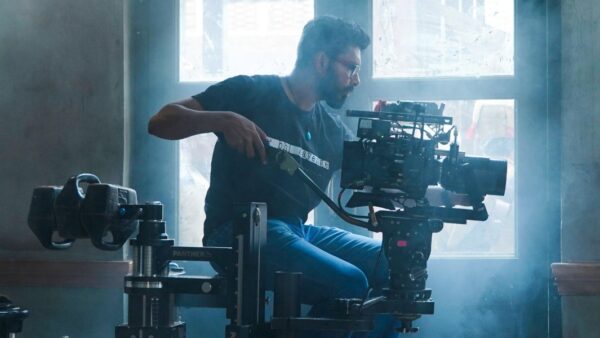
But after seeing a demonstration, he immediately recognized its creative potential. The system allowed controlled, fluid camera movements in confined spaces, with the flexibility to move extremely close to subjects, travel across tables and achieve quick top-angle compositions. It also enabled spontaneous collaboration between the cinematographer and director during shooting. Small, subtle movements throughout scenes helped maintain visual energy without distracting from the performances.
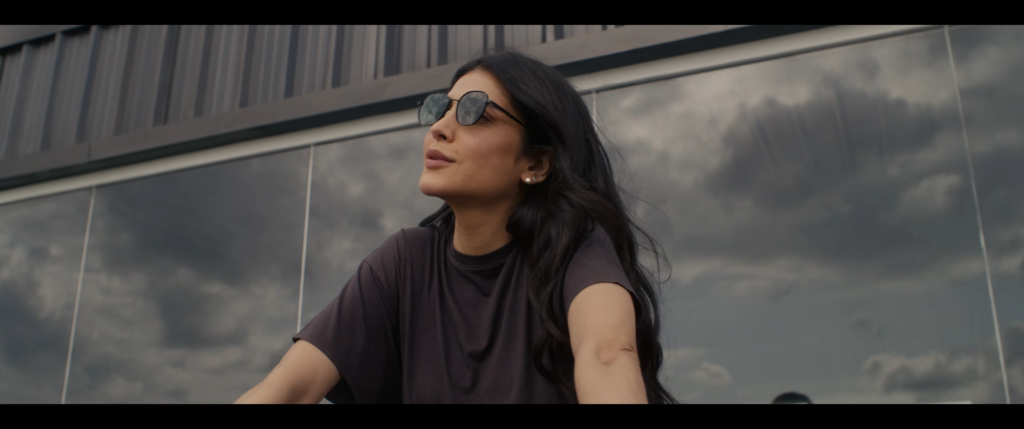
Sujith found the system particularly useful and even preferred it over conventional dolly and Panther arrangements in several situations. It is a good example of how curiosity and openness to new tools can expand a cinematographer’s creative possibilities.
One of the most inspiring aspects of Sujith Sarang’s approach is his willingness to continuously learn.
His exploration of visual effects, Unreal Engine and 3D environments was not simply about adopting new technology. It was about understanding how these tools could help him tell stories more effectively.
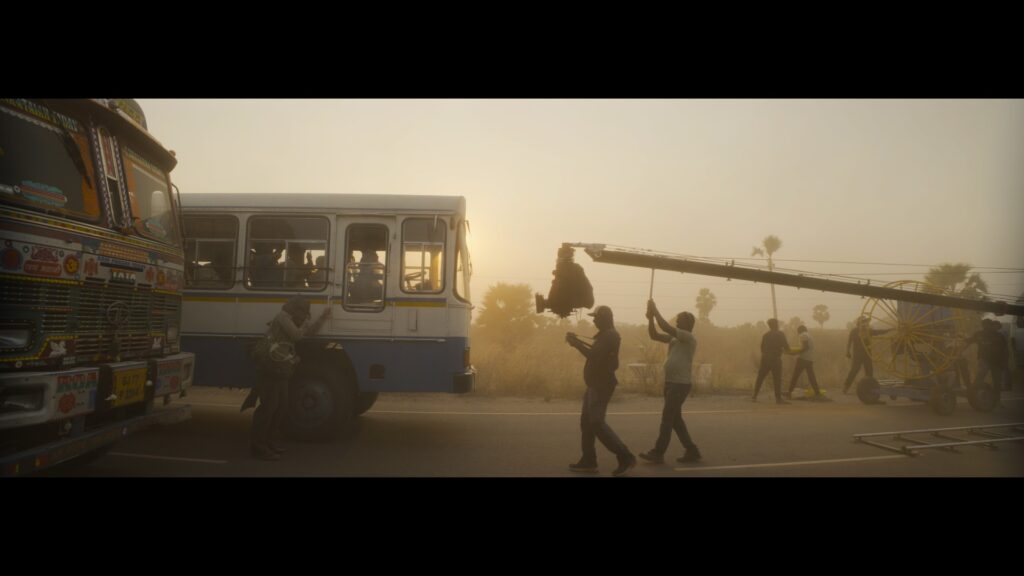
In Aakasamlo Oka Tara, the technical ambition never overshadows the emotional foundation of the film. The contrast between Cooke Anamorphic and Cooke S8/i spherical optics, the carefully balanced lighting, the fluid camera movements and the detailed visual effects all contribute to a unified cinematic experience.
At its heart, the film is about dreams, relationships and the people who remain connected to us through our journey. And that is where the cinematography succeeds.
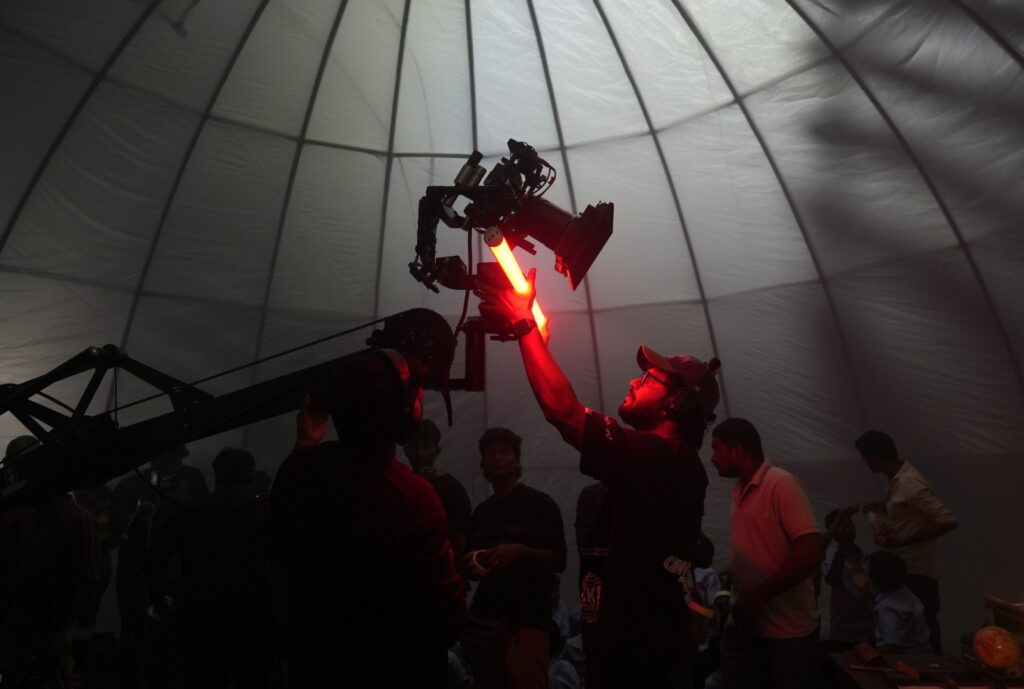
Sujith Sarang’s work reminds us that great cinematography is not about using the same visual formula for every film. It is about discovering the right visual language for every story and in Aakasamlo Oka Tara, Cooke optics become an integral part of that storytelling journey.
Sujith Sarang | Director of Photography
Supported By: Taher Cine Tekniq