Search for lenses, articles and help
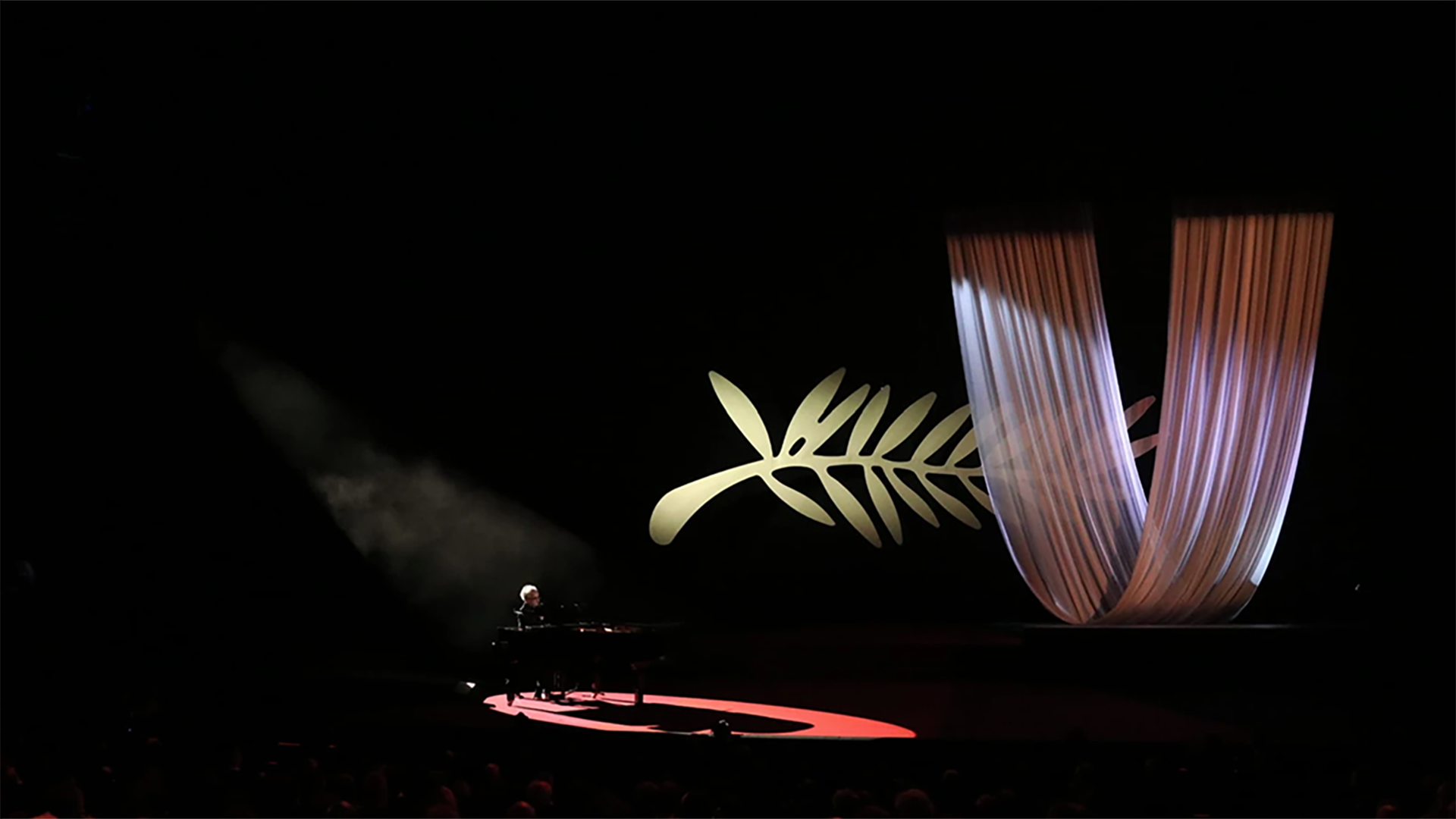
The Cannes Film Festival is one of the most enduring and widely recognized film festivals in the world. The first official festival took place in 1946 and aimed to celebrate international cinema – the featured films at that time came from 21 countries.
In the years that followed, the festival became established as a major cultural event and the highest festival prize – the ‘Palme d’Or’ – was introduced in 1955. Its scope now also includes strands such as ‘Directors’ Fortnight’ and ‘Un Certain Regard’ aimed at highlighting innovative and emerging filmmakers.
The 79th festival wrapped up last week in the south of France and we are proud that Cooke lenses were part of the creative process for fourteen films across various strands of the festival including some of the prize winners.
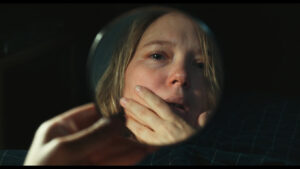
“L’inconnue” (The Unknown) – director: Arthur Harari, cinematographer: Tom Harari – Cooke S4
Beginning with the ‘In Competition’ strand we had “L’inconnue” (The Unknown) directed by Arthur Harari with cinematography by Tom Harari. The brothers shot on the Arri Alexa 35 with Cooke S4 Primes paired with Angénieux Zooms. The film is an existential thriller that describes a disturbing physical experience. The cinematography and staging had to deal with the expressive stylisation of the genre, but the brothers also wanted to achieve a strong sensuality so that the experience of the characters is deeply incarnated and realistically felt by the audience.
The brothers originally wished to shoot on 35mm film stock but came to embrace the sensitivity digital offered in helping them achieve deep depth of field “which is for me an essential and very rich tool – although unfortunately out of fashion — for movie staging. Cooke S4 lenses are among our favourites since Arthur’s previous film, “Onoda,” because they mix depth, optical precision, and sensual softness.” Cinematographer Tom Harari.

“Notre Salut” (A Man of His Time) – director: Emmanuel Marre, cinematographer: Olivier Boonjing – Cooke 10-30mm 16mm zoom4
Director Emmanuel Marre’s “Notre Salut” (A Man of His Time) was also ‘In Competition’, with cinematography by Olivier Boonjing. Inspired by the filmmaker’s own great-grandfather, this 1940s-set drama stars Swann Arlaud as Henri Marre, who arrives in Vichy with a political manuscript hoping to save France — and himself — from downfall. Initial plans involved shooting on 16mm film with mostly natural and practical lighting. For many reasons, budget, take length and camera size they began to investigate digital 16mm options and settled on the Digital Bolex D16 in PL and C-Mount versions with a large variety of lenses including the Cooke 10-30mm 16mm zoom. Marre took home the prize for Best Screenplay and Head Film Editor Nicolas Rumpl won the CST Award for Best Artist-Technician.
Moving to the ‘Special Screenings’ strand we had the Spanish feature “Ceniza en la Loca” (Ashes) directed by Diego Luna and shot by Damián Gracía. The film tells the story of 21-year-old Lucila moving to Spain with her brother Diego to reunite with their mother Isabel and is being praised for its compassion and directorial strength. The filmmakers shot with Cooke S4 lenses and an Alexa 35. “We tried to get a very realistic but soft and gentle feel, and we liked the S4s. I think they are a very understated, elegant, and beautiful set of lenses.”
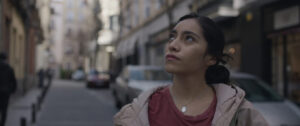
“Ceniza en la Loca” (Ashes) – director: Diego Luna, cinematographer”: Damián Gracía – Cooke S4
There was no shortage of Cooke representation in the ‘Directors’ Fortnight’ independent sidebar. “Death Has No Master” directed by Jorge Thiellen Armand with cinematography by Luis Armando Arteaga was an internationally co-produced Spanish and Italian-language drama centres on a woman (Asia Argento) who travels to Venezuela to sell her late father’s plantation and is forced to confront its current occupants and violent legacy. The team paired Cooke’s 20-100 T3.1 Zoom and Lomo Superspeed primes with an Arri Alexa Mini.
Romanian filmmaker Radu Jude made his Croisette debut with “Le Journal d’une femme de chambre” (The Diary of a Chambermaid) his adaptation of the 1900 novel by Octave Mirbeau, previously adapted by Jean Renoir, Benoît Jacquot and, most famously, Luis Buñuel. This time around Ana Dumitrascu plays an immigrant working for a family in Bordeaux with Vincent Macaigne and Mélanie Thierry heading up the French cast. Cinematographer Marius Panduru used Cooke S4 lenses on a RED Ranger camera.
With “Double Freedom” writer and director Lisandro Alonso, a key figure in the New Argentinian Cinema and ‘slow cinema’ movements, delivered a Spanish-language sequel to his 2001 debut “La Libertad”. The film depicts the life of the original feature’s solitary woodcutter upended by an unexpected responsibility. Cinematographer Cobi Migliora shot on 35mm film, pairing Cooke S4s with a 3-perf Arricam LT.
“We almost never came off the 32mm. Some members of the crew were quite suspicious of that decision, but we don’t regret it. The characters need to move freely through the space, and we always tried not to repeat takes. Sometimes less is more, getting the first take to feel like the first kiss. Let’s imagine a portrait of a space, with the characters’ actions reflected within that frame, nothing more, fragmenting time and space as little as possible. That is where the tempo of the film lives, its nature.”
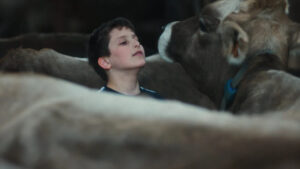
“Gabin” – director: Maxence Voiseux, cinematographer: François Chambe – Cooke S4
Director Maxence Voiseux shot “Gabin” over 10 years – a portrait of Gabin Jourdel from the age of eight to eighteen. The youngest sibling in a family living in northern France, Gabin is expected to take over his father’s butcher shop, but has other dreams. Cinematographer François Chambe paired Cooke S4s with a Sony F55 and Sony Burano for this long-running project.
“Since “Gabin” was a 10-year project, the main goal has always been consistency through time. We needed a reliable and always available camera, codec, and lens system that the production could handle for many years. Back in time, the Sony F55 was the perfect choice for its versatility, robustness, price, and, of course, picture quality. The dynamic range, colour science, and recording options paired with a set of Cooke S4 + diffusion allowed us to give the film a timeless quality. The point of Gabin has always been to make a universal story with almost no “time marker,” so the image should go in the same direction. It was also very clear to us that the ratio should be 4:3 as it is perfect for framing portraits. For the last two years of production, we decided to switch from the F55 to the Sony Burano while keeping the optical system. As these two cameras share the same shooting philosophy, they were easy to match.”
“Lave forventninger” (Low Expectations) was also in ‘Directors’ Fortnight’, directed by Eivind Landsvik with cinematography by Andreas Bjørseth. The film tells the story of an acclaimed artist Maja who reaches breaking point and moves back home to create distance from her chaotic past. Norwegian music star Girl In Red (aka Marie Ulven Ringheim) makes her feature acting debut. The film was shot on 16mm with an Arri 416 and Cooke S4 Primes.
“We wanted to capture the most magic time of the year, the Norwegian spring. It’s cathartic, blooming, vital, sensual, and this is a stark contrast to Maja’s anxious inner world. It’s the worst time to be depressed, when the light comes back again, and everything and everyone is alive. We wanted to create a timeless and painterly world, yet we wanted it to feel modern. The Cooke S4s paired with s16mm gave us that look, modern and timeless. Sharp but soft.”
Finally, in ‘Directors’ Fortnight’ was “I See Buildings Fall Like Lightning” which clinched the People’s Choifce Audience Award for director Clio Barnard and cinematographer Simon Tindall and the much-lauded Palm Dog (yes dog!) award. The film follows childhood friends Patrick, Shiv, Rian, Oli, and Conor who played together, skipped school together and dreamt of the lives they would have one day, but now they’re thirty and the future they imagined is slipping quietly out of reach. The production shot on Super 16mm on an Arri 416 and digitally on a DJI Ronin 4D, and for the latter utilised Cooke SP3 Primes.
“I’ve been fortunate to work with Clio on a number of projects now and know the working environment she prioritises — a compassionate and open perspective on storytelling and an egoless set that facilitates an environment that is optimal for the actors. Being able to shoot in a lightweight way was something I knew would really benefit the film and actors, and we also had limitations to our resources as an independent film. The digital Ronin 4D gave the freedom of handheld while the stability of a gimbal also offered a less intrusive camera, not locked into the shoulder height of the operator. The Cooke SP3 lens was used on the 4D to soften the image.” Simon Tindall
Moving to the ‘Cannes Premiere’ strand we had “The End of It” directed by Maria Martínez Bayona and shot by Andres Arochi Tinajero. Two hundred years into the future, and humankind has conquered death. A cocktail of blood cleanses, bone replacement surgeries and pharmaceuticals bring immortality and endless youth – for those who can afford it, of course. But what happens when one grows tired of infinite life? To capture this compelling story the production used Cooke S4i lenses and an Arri Alexa 35.
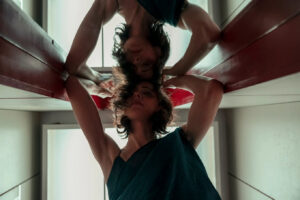
“The End of It” – director: Maria Martínez Bayona, cinematographer: Andres Arochi Tinajero – Cooke S4
“From the beginning, the goal was clear: Even though the film takes place in the future, we never wanted it to feel like a typical sci-fi movie. Everything had to feel very close to the world we live in now. The story is really about vanity, beauty, and the obsession with preserving yourself forever, so keeping the world organic and human wasn’t just an aesthetic choice. It was the whole point. We shot on the ALEXA 35 with Cooke S4/i lenses because they gave us a softness and texture that felt alive. We spent a lot of time in nature, and I wanted those environments to feel rich and tactile while still rendering skin beautifully. There’s a lot of contrast and saturation in the lighting, sometimes almost aggressive, and the Cookes helped balance that in a very natural way. They softened the image just enough to keep everything emotional instead of overly polished. Human rather than futuristic.”
Also in this strand was “Si Tu Penses Bien” (Think Good) directed by Géraldine Nakache with Sylvestre Vannoorenberghe serving as cinematographer. The film shot digitally, and also paired an Arri Alexa 35 with Cooke S4 Primes. When Gil meets Jacques, their love seems irresistible. But the intensity of the early days gives way to a relationship where she feels increasingly trapped, to the point of losing her bearings. Jacques reassures her: if she thinks the right way, only good things will happen to her. Little by little, Gil realizes the insidious control he exerts over her life…
“This is an intimate story where flexibility was key. The Alexa 35 with Cooke S4 worked like a charm for the “present” scenes; it has a roundness while being incredibly reliable and precise. Géraldine needed us to be locked in with the actors, move around quickly, and we really wanted to do long takes for everyone to stay in the scene as much as possible. The Alexa 35 can sit on the shoulder for hours. We still had different timelines to suggest, so we changed our set of lenses for Zeiss vintage and a little bit harsher look for the “past” scenes — without it being too much on the nose. We also used the different texture settings that the Alexa 35 offered for the past and present.”
Turning to the ‘Un Certain Regard’ lineup we began with director Katharina Rivlis’s “I’ll be Gone in June”. This debut feature is set in a post-9/11 America, where a 16-year-old German exchange student struggles to settle in a sleepy New Mexico desert town, until she meets a boy whose quiet sadness matches her own. Wim Wenders is among the producers, with young actors Naomi Cosma and David Flores heading up the cast. Giulia Schelhas was the cinematographer and used rehoused Cooke Panchro S2s and Cooke Varotal 18-100 lenses on an Arri Alexa 35.

“I’ll Be Gone in June” – director: Katharina Rivlis, cinematographer: Giulia Schelhas – Cooke Panchro S2 and Varotal 18-100
“We chose to shoot on the ARRI Alexa 35, which was incredibly important given that large parts of the film take place in the desert. The camera allowed us to retain detail in the highlights and avoid a burnt-out image, preserving the full tonal range of the landscape. We paired this with rehoused Cooke Panchro S2 lenses, beautiful vintage optics with a warm, soft character. There is something both delicate and cinematic in the way they render the image, which felt essential in following our main character Franny’s inner and outer journey during her intense exchange year in New Mexico. We complemented the primes with a Cooke Varotal zoom, which shares a similarly warm and soft quality, allowing us to maintain visual continuity while introducing more flexibility in framing and movement. The lenses provided a strong foundation for the film’s texture. We wanted the landscape to carry its heat, dryness, and emotional weight into the image. Thanks to the Alexa 35 and the Cooke Panchros, the landscape feels present and intense, but never aggressive, and remains connected to Franny’s emotional state.”
And for the prize winner of the ‘Un Certain Regard’ strand we had “Everytime” a psychological drama that stars Birgit Minichmayr (The Blood Countess) and centres on a grieving mother, daughter and teenage boy who travel to Tenerife for a delayed family holiday, where past and present begin to blur. Directed by Sandra Wollner and shot by Gregory Oke (“Aftersun”) the production shot between Berlin, Vienna and Tenerife on an Alexa 35 with the vintage Cooke Cinetal 25-250mm zoom making up part of their lens package.
Finally, screening ‘Out of Competition’ is “Her Private Hell” by director Nicolas Winding Refn and shot by Magnus Nordenhof on Arri Alexa 35 and Cooke Anamorphic/i S35 2x lenses. Winding Refn won the Best Director prize at Cannes in 2011 for “Drive”, which made more than $80m at the worldwide box office and boosted its director’s international profile. “Her Private Hell” is his first feature since 2016’s “The Neon Demon” which was also shot with the aforementioned S35 Anamorphics. Plot details have been closely guarded, with the film billed as an original thriller featuring plenty of glamour, sex and violence. Sophie Thatcher and Charles Melton star.
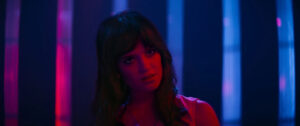
“Her Private Hell” – director: Nicolas Winding Refn, cinematographer: Magnus Nordenhof – Cooke Anamorphic /i S35
“The world-building had a lot to do with pop iconography, faces, costumes, colour, and American culture. Not in a clean reference way, but more like Andy Warhol filtered through Nic’s world. At the same time, the film shouldn’t become too polished or too decorative. It still needed some rawness and a feeling that something unfiltered was happening inside this very constructed world. The Cooke anamorphics helped us with that because they are beautiful, but they are not neutral. They can make a face feel iconic, or a space feel more unreal, without doing too much.” Magnus Nordenhof.
Cooke are proud to be a part of these varied and powerful films – thank you to all the filmmakers involved for shooting on Cooke.