Search for lenses, articles and help
There is a somewhat lesser-known chapter of Cooke’s history that owes its existence not to the film set, but to the outside broadcast van: the television zoom lenses built from 1953 to 1979. Marketed, like the cinema lenses that would follow from the 1970s onwards, under the name Varotal, each was a bespoke design, engineered for the television cameras of its moment – cameras that were in a state of near-constant reinvention.
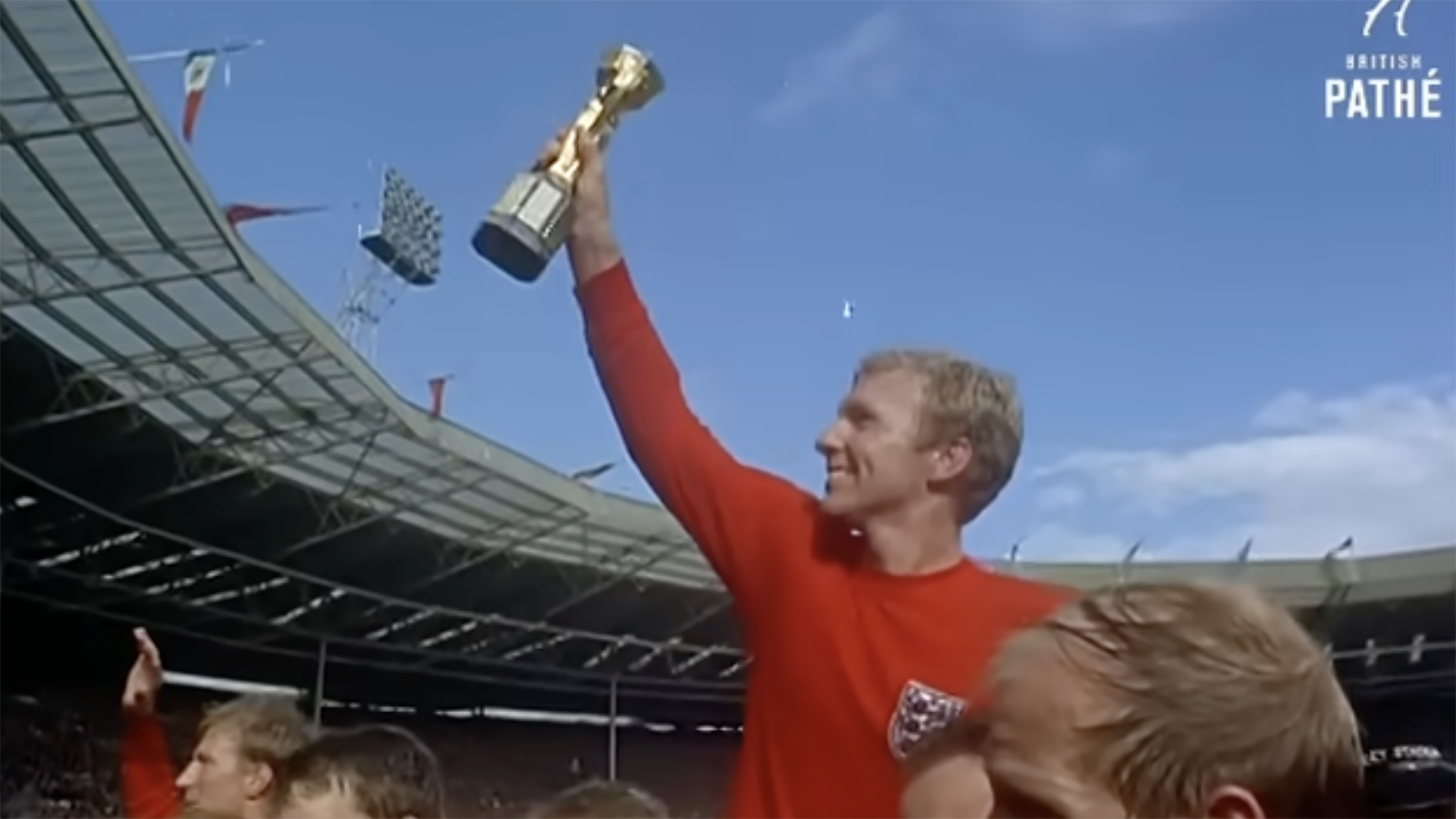
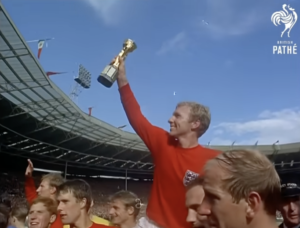
It is easy to forget, watching a match unfold in immaculate detail today, that someone once had to solve the fundamental problems of how a lens could capture these momentous occasions with such pace, range and accuracy. These lenses were consistently present at moments to be remembered including England’s 1966 FIFA World Cup Win. They were masterminded throughout by lens designer Gordon Cook who would go on to make cinema lens history from the 1970s onwards, but whose earliest triumphs were achieved live and with no second takes available.
Released in 1960, the Taylor-Hobson Varotal III, was the first lens in the world designed for plug-in servo modules, although television at the time wasn’t quite ready for that. It was also one of the earliest to employ a doubler, offering a focal length range of either 102-508mm or 203-1060mm, selectable via a small lever on the barrel and had a wide-open aperture of f/4 or f/8 respectively.
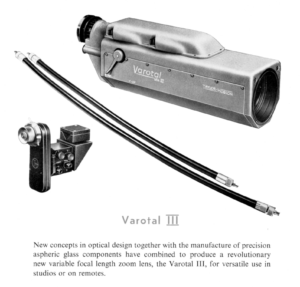
Varotal III with doubler lever on the back
It found its moment that same year inside Westminster Abbey, filming Princess Margaret’s wedding, the first British Royal Wedding to ever be televised and watched by an estimated 300 million people worldwide. It was the first time a zoom lens had been used at such an occasion, and legend has it that it was hidden among the flowers inside the Abbey!
By 1963, the Varotal V arrived: a sealed optical unit that did away with pumping action altogether, reducing wear and the need for cleaning, and notably the first lens ever designed with the aid of a digital computer. It had a focal length range of 40-400mm and a constant wide-open aperture of f/4. Its front element alone weighed just over 2kg, with three range extenders available for those who needed even further reach.
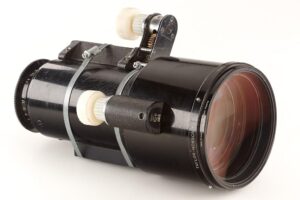
Then, in 1966, came the Varotal XIV, the first lens in the world to offer a 16:1 range, stretching from 63.5mm to 1016mm at a wide-open aperture range of f/4 to f/7.5. The lens was most often supplied as the “XIVSP” package: the Varotal XIV paired with a servo-operated zoom system.
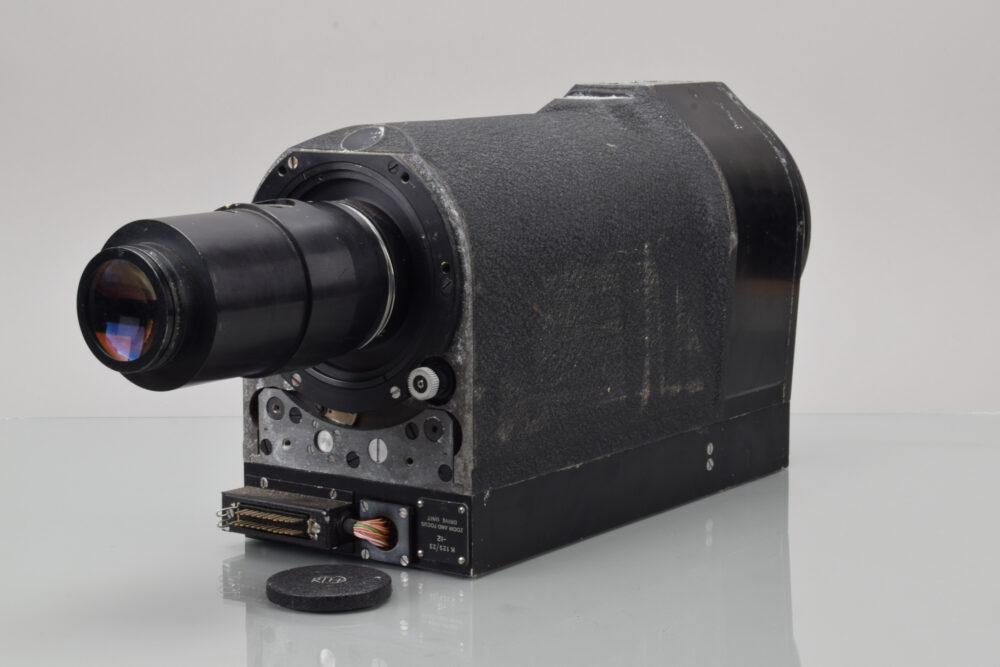
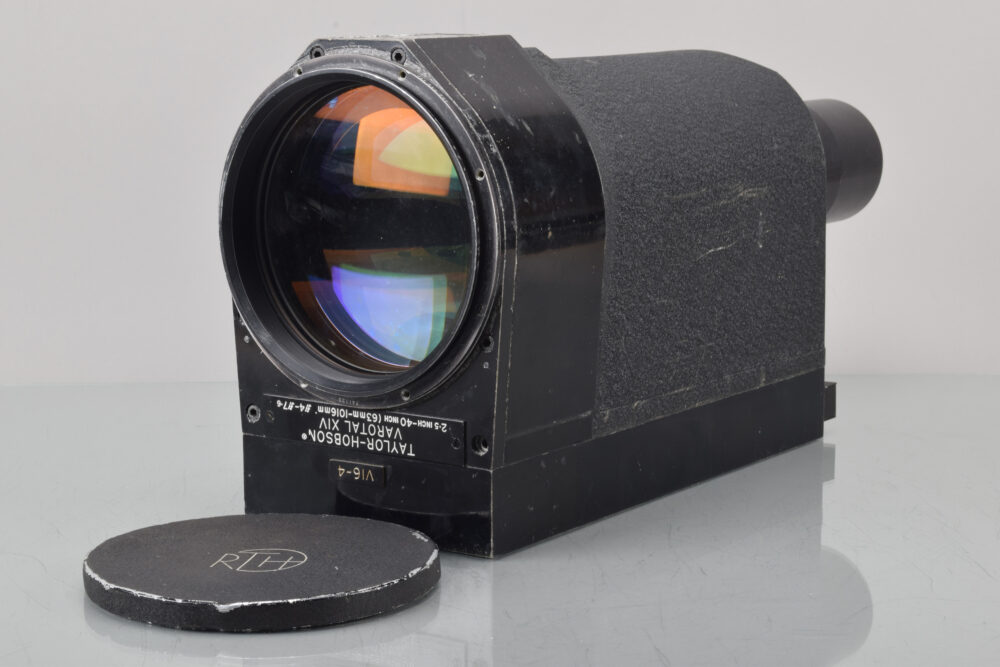
It demanded extraordinarily precise internal movement to pull off, and it found its purpose that summer capturing the FIFA World Cup for the BBC in which England triumphed for the first time.
 When UK colour broadcast transmission began in 1967, the Varotal XX and XXX arrived to meet it. Many customers found the Varotal XX so capable they felt it would make a perfect cine zoom lens and Gordon Cook announced the Cooke Varotal 20-100 T3.1 for 35mm cameras in 1970 and continued to trailblaze in that world [his subsequent cinema work is documented HERE].
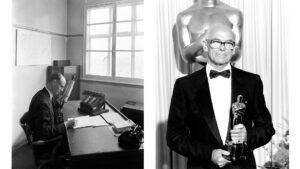
Cook at work and receiving his Gordon E. Sawyer Oscar in 1989
Production of TV zoom lenses was phased out in 1979. Cook himself explained it plainly in 1985: without a standard for television cameras, every lens had effectively become a custom job, and custom jobs, however brilliant, don’t stay financially viable forever. Cine zoom production, meanwhile, went from strength to strength, always held to the Taylor-Hobson standard that “a cine zoom lens must be equal to the performance of fixed focal length lenses.”
The instinct that built these lenses, solving problems no one had solved yet, in service of capturing a moment that mattered, is the same instinct running through every lens Cooke has made since.